
Contents
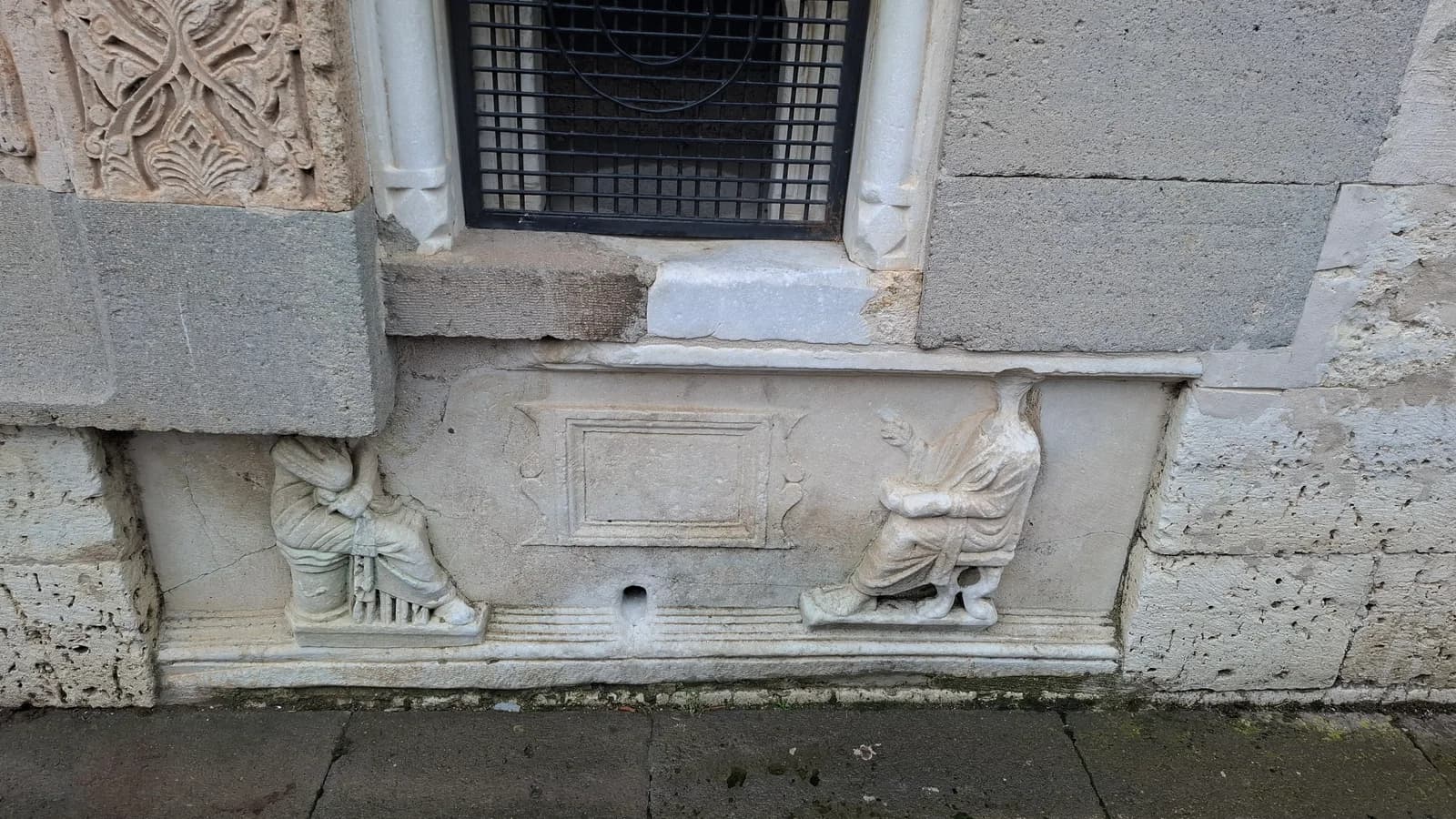
An urban ensemble
The mosque did not stand alone. Local heritage records describe the nearby bath, covered market, tomb and other buildings linked to the Eşrefoğlu period. TDV presents the complex as one of the anchors of İçerişehir, contrasting it with the Hacı Armağanşah area of Dışarışehir.[1][2]
The group’s dates, functions and later repairs differ from building to building. Looking at them together clarifies the dynasty’s investment in worship, exchange, education and urban defence without assuming that every surviving wall was built in the same year.[3][4]
Use after the beylik
The foundation endowment supported the mosque and its personnel; later Ottoman repair and reuse kept parts of the ensemble in the life of the town. İsmail Ağa’s medrese belongs to a later phase of the same neighbourhood, showing that the urban core accumulated layers.[5][6]
A planned beylik quarter
Seyfeddin Süleyman shifted his centre to Beyşehir in the late 1280s and invested in a fortified urban quarter. The gate and wall remains mark the defended İçerişehir; the congregational mosque provided its most prominent public building. Sait Kofoğlu’s account describes a bedesten opposite the mosque, an inn and a two-part bath, so the complex served exchange and hospitality as well as worship.[7][8]
The endowment inscription at the mosque’s portal lists income-producing properties linked to the founder’s building programme. Reading the deed with the structures explains how shops, bath and mills could support a religious institution. It also shows why the buildings form an urban ensemble even though each had its own practical use and later alterations.[9][10]
Buildings and later phases
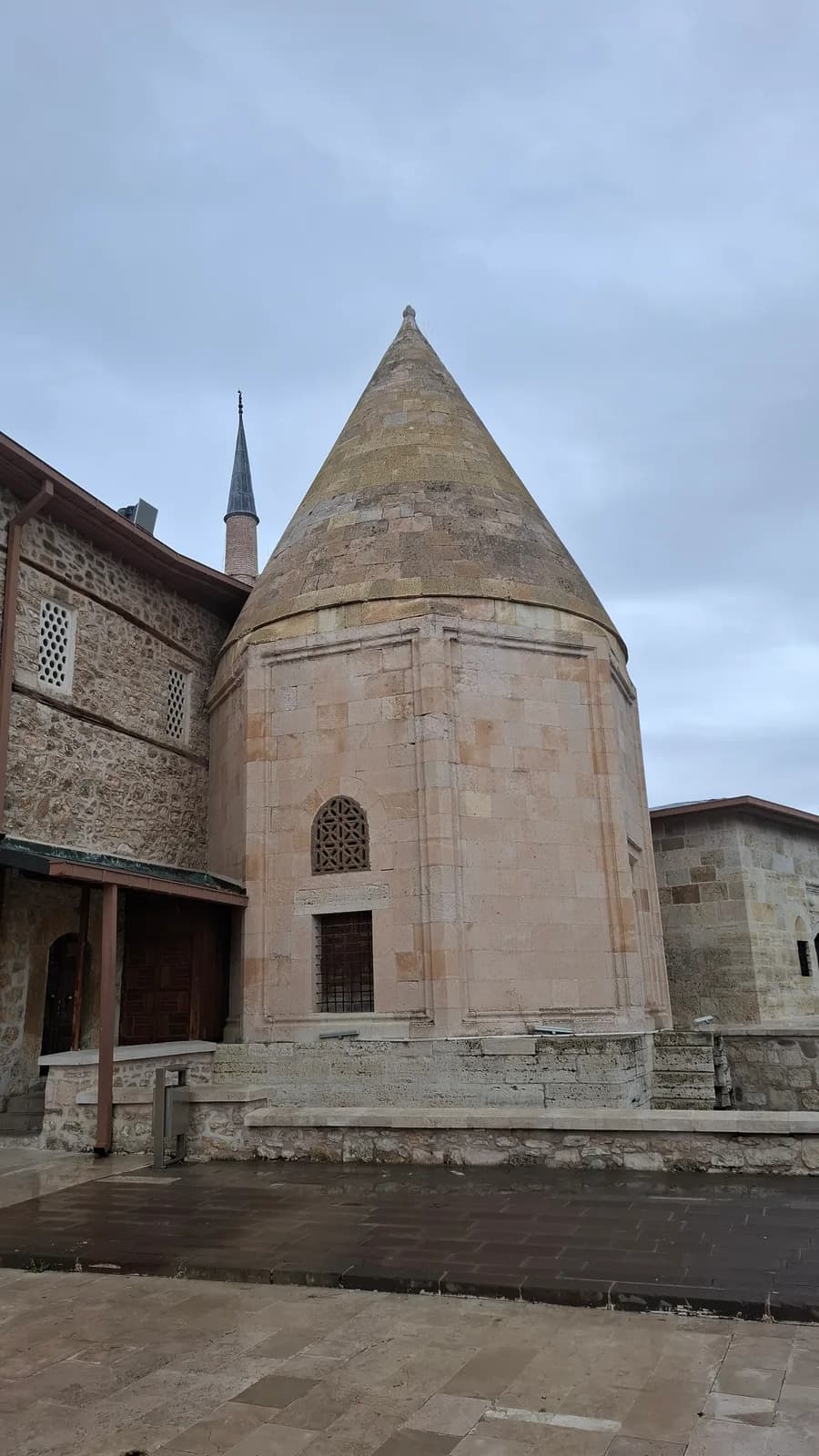
The covered market stood near the mosque; the double bath was to its west. The founder’s tomb and educational structures add commemoration and teaching to the quarter. The municipality’s heritage survey locates these surviving parts in relation to one another rather than presenting the mosque as an isolated attraction.[11][12]
Not every structure belongs to one campaign. A scholar’s reading of the inscription on İsmail Ağa Medrese points to a fourteenth-century phase, while the municipal account attributes an earlier foundation to Süleyman and later repair to İsmail Ağa. Both accounts establish continued medieval investment, but they disagree on the first building phase.[13][14]
A quarter through later centuries
Ottoman descriptions still list the mosque, medreses, bath, market and castle among the town’s institutions. The bedesten was repaired in the sixteenth century and again in 1975, according to the municipality, and is now used for exhibitions and meetings. Reuse changed the commercial building’s daily role without erasing its place in the historical street network.[2][12]
References
- 1Beyşehir Belediyesi · Beyşehir Tarih ve Kültür Mirası · Beyşehir Belediyesi · pp. 17–29
- 2M. Akif Erdoğru · Beyşehir - TDV İslâm Ansiklopedisi · Türkiye Diyanet Vakfı İslâm Ansiklopedisi · 1992
- 3Beyşehir Belediyesi · Beyşehir Tarih ve Kültür Mirası · Beyşehir Belediyesi
- 4Hüseyin Muşmal · Beyşehir Kenti’nin Oluşumu ve Gelişimi Üzerine Bazı Değerlendirmeler · Palet Yayınları / Prof. Dr. Bayram Ürekli’ye Armağan · 2023
- 5M. Akif Erdoğru · Eşrefoğlu Seyfeddin Süleyman Bey Camiinin Vakıfları · Tarih İncelemeleri Dergisi 6/1, pp. 91–108 · 1991
- 6Beyşehir Belediyesi · Beyşehir Tarih ve Kültür Mirası · Beyşehir Belediyesi · pp. 23–25
- 7Sait Kofoğlu · Eşrefoğulları · TDV İslâm Ansiklopedisi · 1995
- 8Sait Kofoğlu · A Principality In Southwest Anatolia In The Post-Selçuk Era: Eşrefoğulları · SDÜ Fen Edebiyat Fakültesi Sosyal Bilimler Dergisi · 2009 · abstract
- 9M. Akif Erdoğru · Eşrefoğlu Seyfeddin Süleyman Bey Camiinin Vakıfları · Tarih İncelemeleri Dergisi 6/1, pp. 91–108 · 1991 · pp. 91–108
- 10Doğan Yavaş · Eşrefoğlu Camii · TDV İslâm Ansiklopedisi · 1995
- 11Beyşehir Belediyesi · Beyşehir Tarih ve Kültür Mirası · Beyşehir Belediyesi · pp. 17–24
- 12Beyşehir Belediyesi · Bedesten · Beyşehir Belediyesi Gezi Rehberi
- 13İbrahim Kunt, Hüseyin Muşmal, Mustafa Çetinaslan · Beyşehir’de Moğol Emiri İsmail Ağa Dönemine Ait Farsça-Arapça Sandukalar · Turkish Studies 9/1, pp. 367–386 · 2014 · p. 369 n. 3
- 14Beyşehir Belediyesi · İsmailağa Medresesi (Taş Medrese) · Beyşehir Belediyesi Gezi Rehberi