
Contents
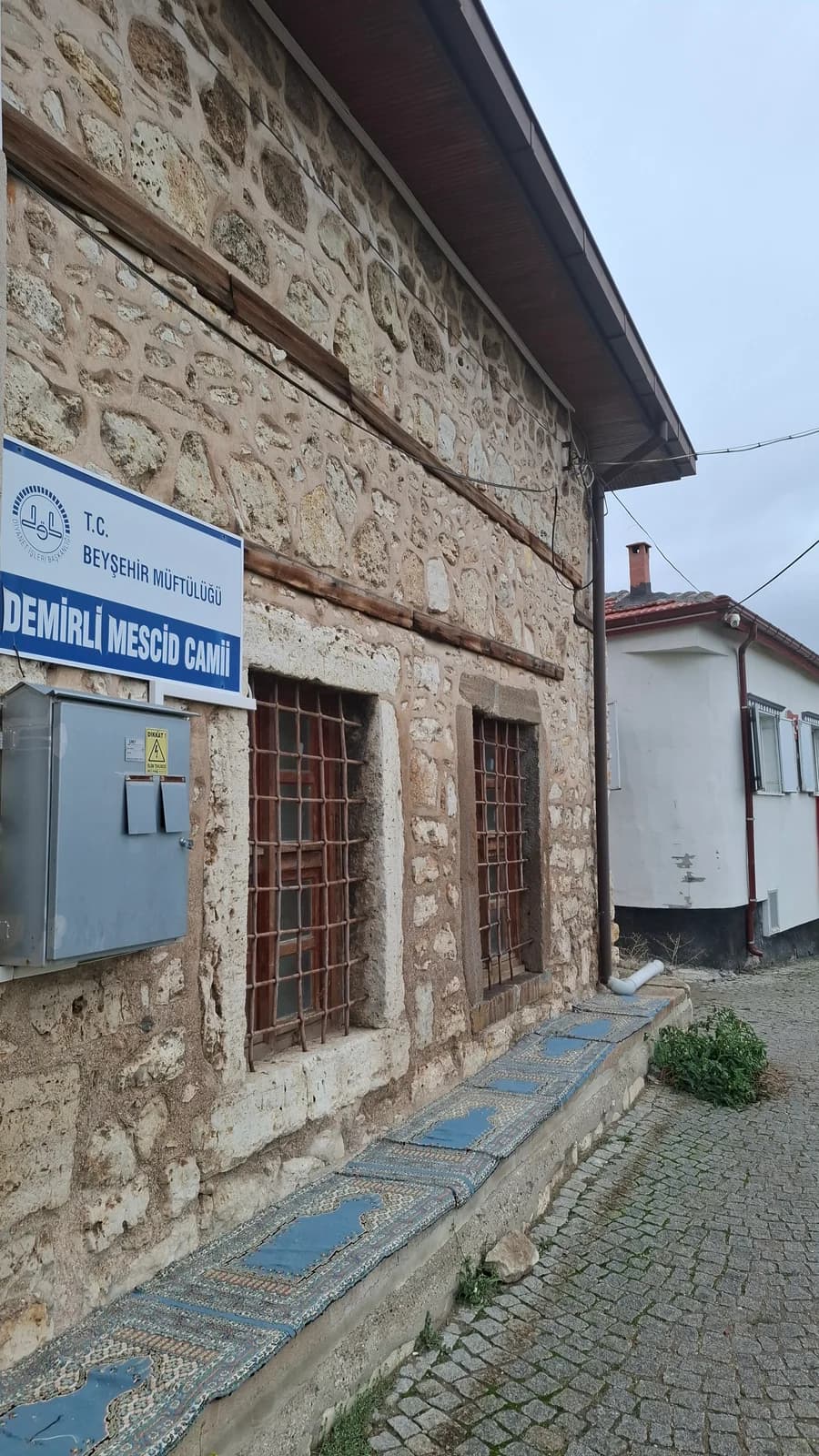
An inscription and more than one name
The building stands in historic İçerişehir, west of Eşrefoğlu Mosque. Its entrance inscription gives 714 AH, corresponding to 1314 CE, and names Şerafeddin Subaşı Emir Ahmet Bey as patron. Although it is commonly called a mescit, the inscription uses the word medrese. Caner Arabacı’s study of Beyşehir education treats that wording as evidence of a teaching role, while a recent architectural study examines whether the functions overlapped.[1][2]
Historical records also call it Subaşı Mescit. Arabacı notes that Ottoman endowment registers apply medrese and mescit terms to what appears to be one institution. The terms suggest that worship and instruction may have shared a modest structure, with the balance changing across centuries. This documentary complexity is useful: the smaller neighbourhood buildings of Beyşehir had histories of their own, beyond the town’s famous congregational mosque.[1]
A single timber support
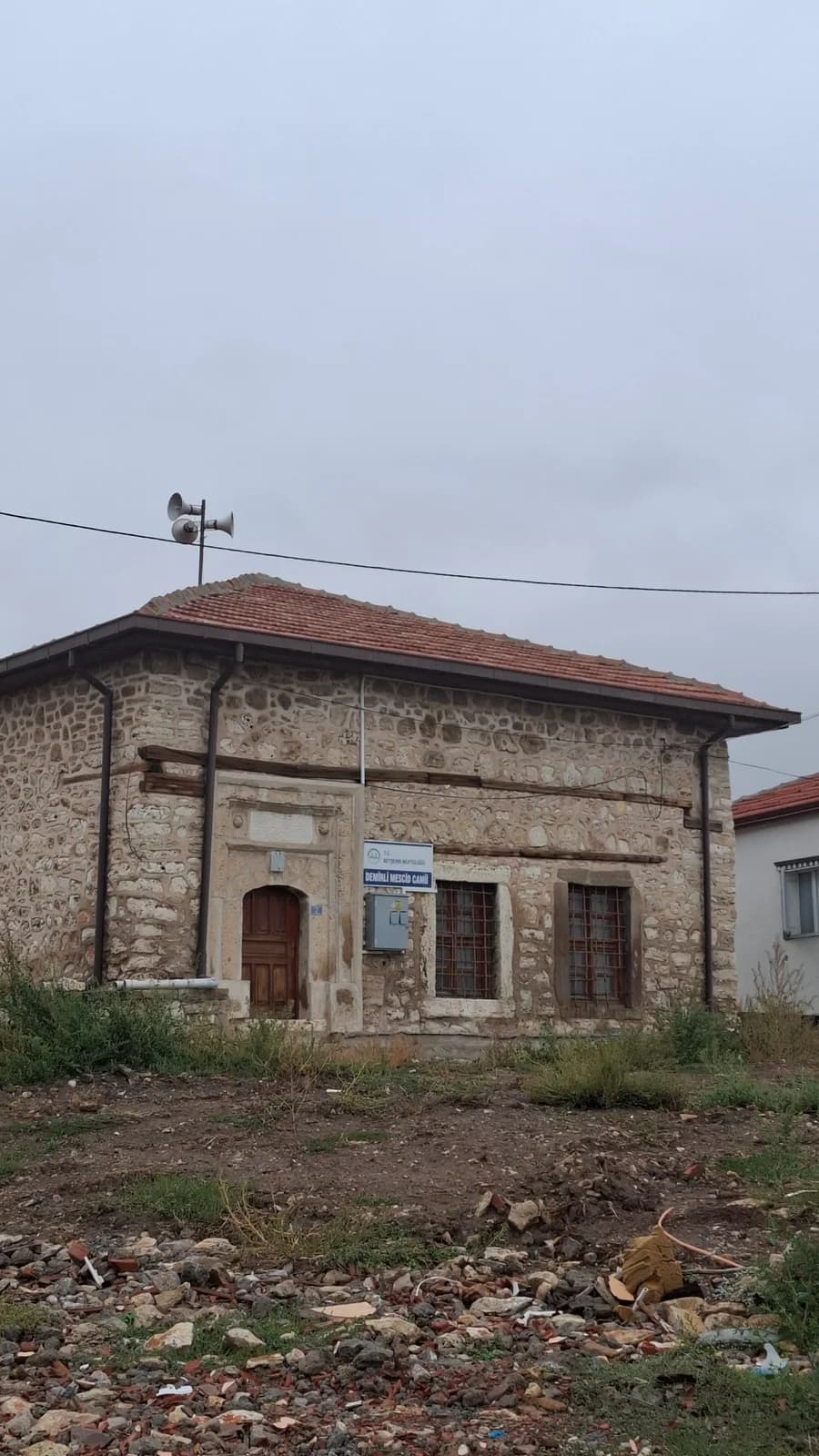
Ahmet Yavuzyılmaz and Ayşe Budak draw attention to the single wooden support in its prayer hall. Their 2024 comparison places the Beyşehir structure within a longer Anatolian tradition of timber-supported rooms. Its small scale differs from the many-columned Eşrefoğlu Mosque, although both belong to a region where wood remained important in religious building. The municipal guide separately describes a west-facing entrance and six windows, two at a lower level.[2][3]
The guide explains the familiar name Demirli through the iron grilles in the windows. That feature explains a name but does not by itself date the masonry or establish the first function of the structure. The dated inscription, observed timber construction and changing documentary names are different kinds of evidence. Read together, they avoid reducing the mescit to one picturesque detail and make its place in Eşrefoğulları architecture clearer.[3][2]
Endowment and repair
İsmail Efe records later endowed property and books associated with the mescit or medrese, showing that its history did not end with the 1314 inscription. His account reports that it was closed for worship in 1933, left unused for a period and repaired and reopened in 1982. These dates describe changes of use and care rather than an unchanged medieval interior. Demirli Mescit therefore links beylik building, Ottoman records and twentieth-century conservation in one small site.[4]
References
- 1Hüseyin Muşmal (ed.) · Beyşehir Araştırmaları: Tarih, Kültür, Sanat, Turizm, Sanayi ve Ticaret Şehri Beyşehir · Palet Yayınları · 2021 · Caner Arabacı, “Beyşehir’de Eğitim,” pp. 342–343
- 2Ahmet Yavuzyılmaz; Ayşe Budak · Beyşehir Demirli Mescit örneğinde Anadolu’da tek ahşap taşıyıcılı harim geleneği · Nevşehir Hacı Bektaş Veli Üniversitesi SBE Dergisi 14/3, pp. 1086–1107 · 2024 · pp. 1086–1107
- 3Beyşehir Belediyesi · Demirli Mescid / Demirli Prayer Room · Beyşehir Belediyesi Gezi Rehberi
- 4İsmail Efe · Eşrefoğlu Camii ve Külliyesi Beyşehir · Dokuz Yayınları · 2013 · p. 165