
Contents
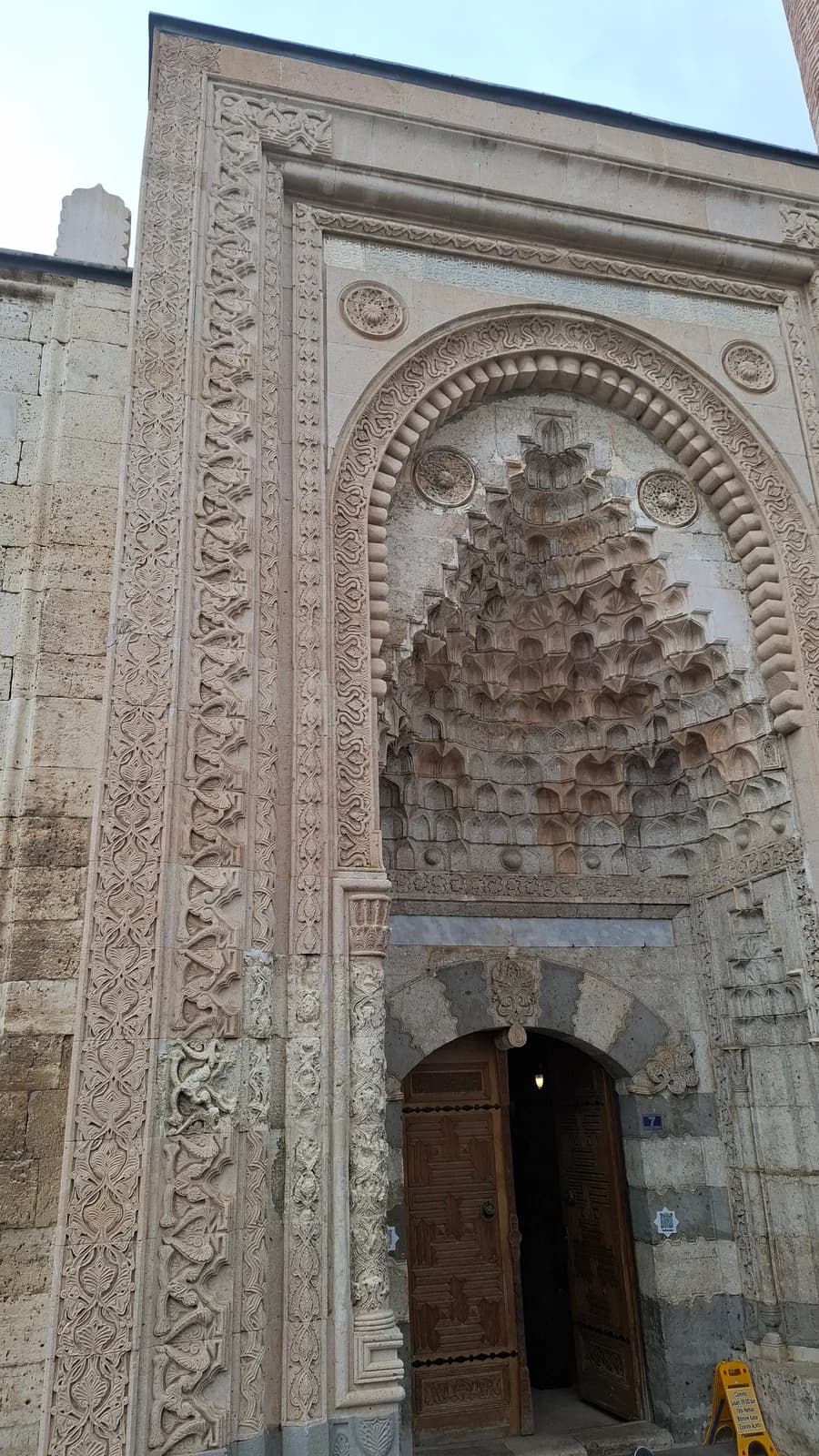
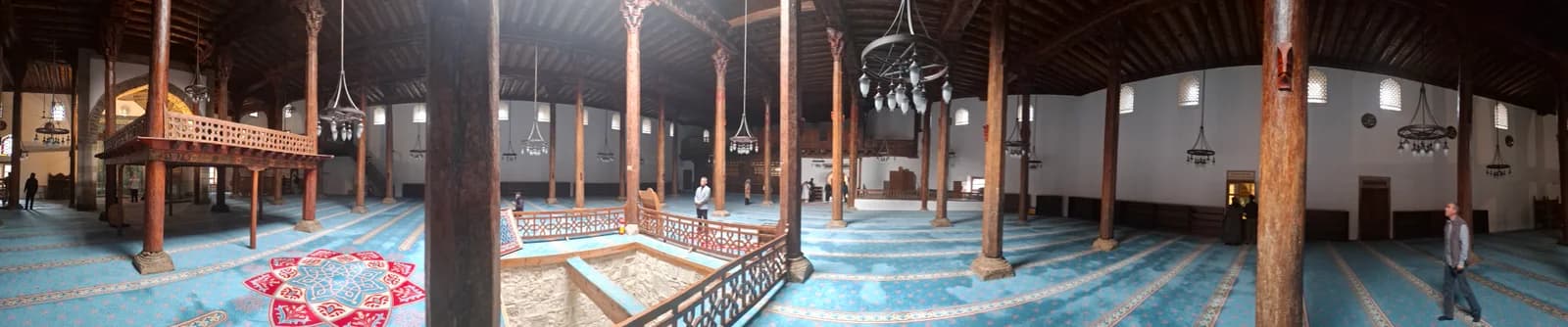
A timber hall within stone walls
Eşrefoğlu Süleyman Bey commissioned the mosque in 1296–99. Its masonry envelope encloses rows of wooden columns supporting a timber ceiling. Stone portal, tile-covered mihrab, carved wooden minbar and painted woodwork bring several craft traditions into one building.[1][2]
The hall’s wooden structure is central to its significance. The minbar uses the kündekâri tradition of interlocking joinery, while the mihrab is a different, tile-rich architectural element. Accounts of a central snow pit and its exact environmental function should be treated as an architectural interpretation rather than the sole explanation of the building’s survival.[1][2][3]
World Heritage and living use
In 2023 UNESCO inscribed the mosque with four other buildings as “Wooden Hypostyle Mosques of Medieval Anatolia.” The listing is a serial inscription: Beyşehir’s mosque is one component of the World Heritage property. It had earlier appeared on a tentative list, but the 2023 decision is the operative inscribed status.[2]
The mosque remains a place of worship. Its context includes the surrounding Eşrefoğlu buildings, later repairs and objects once kept inside, including historic carpet fragments. Its present fabric is both a medieval source and the result of continued care.[2][1][4]
Inscriptions and building history
Two inscriptions anchor the mosque’s chronology. TDV records one associated with the building campaign of 1296–97 and another dated 1299–1300. This is a stronger basis for dating than attributing the mosque to an earlier Seljuk ruler. The building formed part of Seyfeddin Süleyman Bey’s new beylik capital and was linked to his endowment.[1][5]
The founder’s tomb stands in the complex; its inscription dates the tomb to 1301–02, while TDV’s dynastic history dates his death to August 1302. A muezzin’s platform belongs to a later phase recorded as 1574–75. The roof was also altered in the twentieth century, including work recorded in 1941 and copper covering in 1956. The present structure therefore contains medieval craftsmanship and later maintenance.[1][5]
Plan, minbar and mihrab
A monumental stone portal leads into a timber-roofed prayer hall divided into seven aisles. Wooden columns and painted ceiling beams organize the hall; a central opening and recessed space form a distinctive element of its plan. Published descriptions differ in their column counts, so the arrangement is clearer than any single unqualified total.[1][2][3]
The wooden minbar is assembled in the kündekâri technique, and its inscription names the maker Îsâ. The tall mihrab instead uses glazed tile and mosaic tile. Those surviving details let the visitor see different workshops’ materials in one programme: carved joinery, painted timber, stone carving and ceramics.[1]
What the UNESCO listing covers
UNESCO’s 2023 serial inscription gathers five medieval Anatolian timber-column mosques. It recognizes the cultural significance of a building tradition and its surviving components; it does not turn the whole of Beyşehir into a World Heritage property. Eflatunpınar, elsewhere in the basin, has a separate Tentative List status.[2][6]
References
- 1Doğan Yavaş · Eşrefoğlu Camii · TDV İslâm Ansiklopedisi · 1995
- 2UNESCO World Heritage Centre · Wooden Hypostyle Mosques of Medieval Anatolia · UNESCO · 2023
- 3İsmail Efe · Eşrefoğlu Camii ve Külliyesi Beyşehir · Eşrefoğlu Camii İmam Hatibi Yayını · 2014 · pp. 81–83
- 4Beyşehir Belediyesi · Beyşehir Tarih ve Kültür Mirası · Beyşehir Belediyesi · pp. 17–19
- 5Sait Kofoğlu · Eşrefoğulları · TDV İslâm Ansiklopedisi · 1995
- 6Permanent Delegation of Türkiye to UNESCO · Eflatun Pinar: The Hittite Spring Sanctuary · UNESCO World Heritage Centre · 2014