
Contents
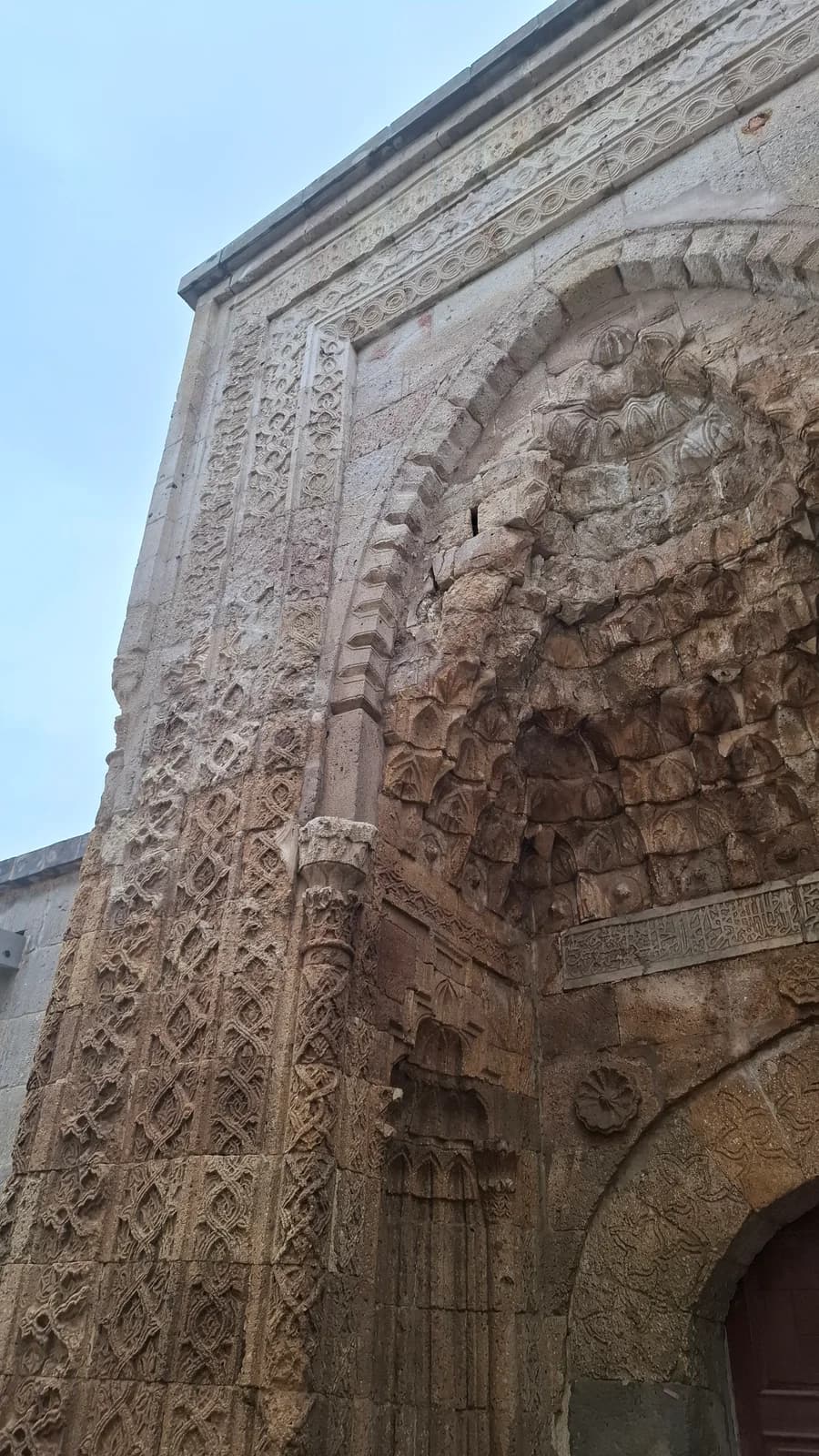
A later layer beside the mosque
The medrese stands in the İçerişehir group near Eşrefoğlu Mosque. Local descriptions connect it to Emir İsmail Ağa and distinguish its history from the original mosque foundation. Scholarship on Arabic and Persian inscribed cenotaphs adds documentary and material evidence for the emir’s period.[1][2]
Accounts differ on whether specific parts were first built by Eşrefoğlu figures and later repaired by İsmail Ağa. It is safest to read the building as a layered medieval site and cite inscriptions and fabric for more precise phases.[3][2]
Education and commemoration
The medrese makes teaching part of Beyşehir’s medieval landscape, while nearby funerary objects show commemoration in the same quarter. These uses followed the beylik’s first building phase and demonstrate continued investment in the old urban core.[4][2]
An inscription and two attributions
The study by İbrahim Kunt, Hüseyin Muşmal and Mustafa Çetinaslan reports an Arabic inscription identifying İsmail Ağa as patron of the medrese in 771 AH, approximately 1369–70 CE. The town’s municipal guide instead says the first building was commissioned by Eşrefoğlu Süleyman and later repaired by İsmail Ağa. The sources may describe different construction phases, but the evidence presented does not settle the entire fabric’s first date.[5][6]
Both sources locate the building west of Eşrefoğlu Mosque. This proximity explains why it is read within the old urban core even though its fourteenth-century inscription belongs after the Eşrefoğulları dynasty. Its name, “Taş Medrese,” refers to the stone building and helps distinguish it from other educational institutions recorded in Beyşehir.[7][6]
The emir’s tomb and local memory
The 2014 study says İsmail Ağa died in 1379 and was buried in a tomb at his medrese. It identifies his father as Halil from the medrese inscription and grave marker. The tomb across from the school is also locally called Süt Dede; the municipal page records a devotional practice by women seeking help with lactation. That is evidence of local belief, not a medical claim.[8][6]
The nearby Arabic and Persian inscribed cenotaphs from the emir’s period were moved after some lodges disappeared. Their original locations and the standing medrese should be kept distinct. Together they show teaching, patronage and commemoration in Beyşehir during a politically unsettled century.[9]
References
- 1Beyşehir Belediyesi · Beyşehir Tarih ve Kültür Mirası · Beyşehir Belediyesi · pp. 23–25
- 2İbrahim Kunt, Hüseyin Muşmal, Mustafa Çetinaslan · Beyşehir’de Moğol Emiri İsmail Ağa Dönemine Ait Farsça-Arapça Sandukalar · Turkish Studies 9/1, pp. 367–386 · 2014
- 3Beyşehir Belediyesi · Beyşehir Tarih ve Kültür Mirası · Beyşehir Belediyesi
- 4M. Akif Erdoğru · Beyşehir - TDV İslâm Ansiklopedisi · Türkiye Diyanet Vakfı İslâm Ansiklopedisi · 1992
- 5İbrahim Kunt, Hüseyin Muşmal, Mustafa Çetinaslan · Beyşehir’de Moğol Emiri İsmail Ağa Dönemine Ait Farsça-Arapça Sandukalar · Turkish Studies 9/1, pp. 367–386 · 2014 · p. 369 n. 3
- 6Beyşehir Belediyesi · İsmailağa Medresesi (Taş Medrese) · Beyşehir Belediyesi Gezi Rehberi
- 7İbrahim Kunt, Hüseyin Muşmal, Mustafa Çetinaslan · Beyşehir’de Moğol Emiri İsmail Ağa Dönemine Ait Farsça-Arapça Sandukalar · Turkish Studies 9/1, pp. 367–386 · 2014 · p. 369
- 8İbrahim Kunt, Hüseyin Muşmal, Mustafa Çetinaslan · Beyşehir’de Moğol Emiri İsmail Ağa Dönemine Ait Farsça-Arapça Sandukalar · Turkish Studies 9/1, pp. 367–386 · 2014 · p. 369 and n. 9–11
- 9İbrahim Kunt, Hüseyin Muşmal, Mustafa Çetinaslan · Beyşehir’de Moğol Emiri İsmail Ağa Dönemine Ait Farsça-Arapça Sandukalar · Turkish Studies 9/1, pp. 367–386 · 2014 · pp. 367–371