
Contents
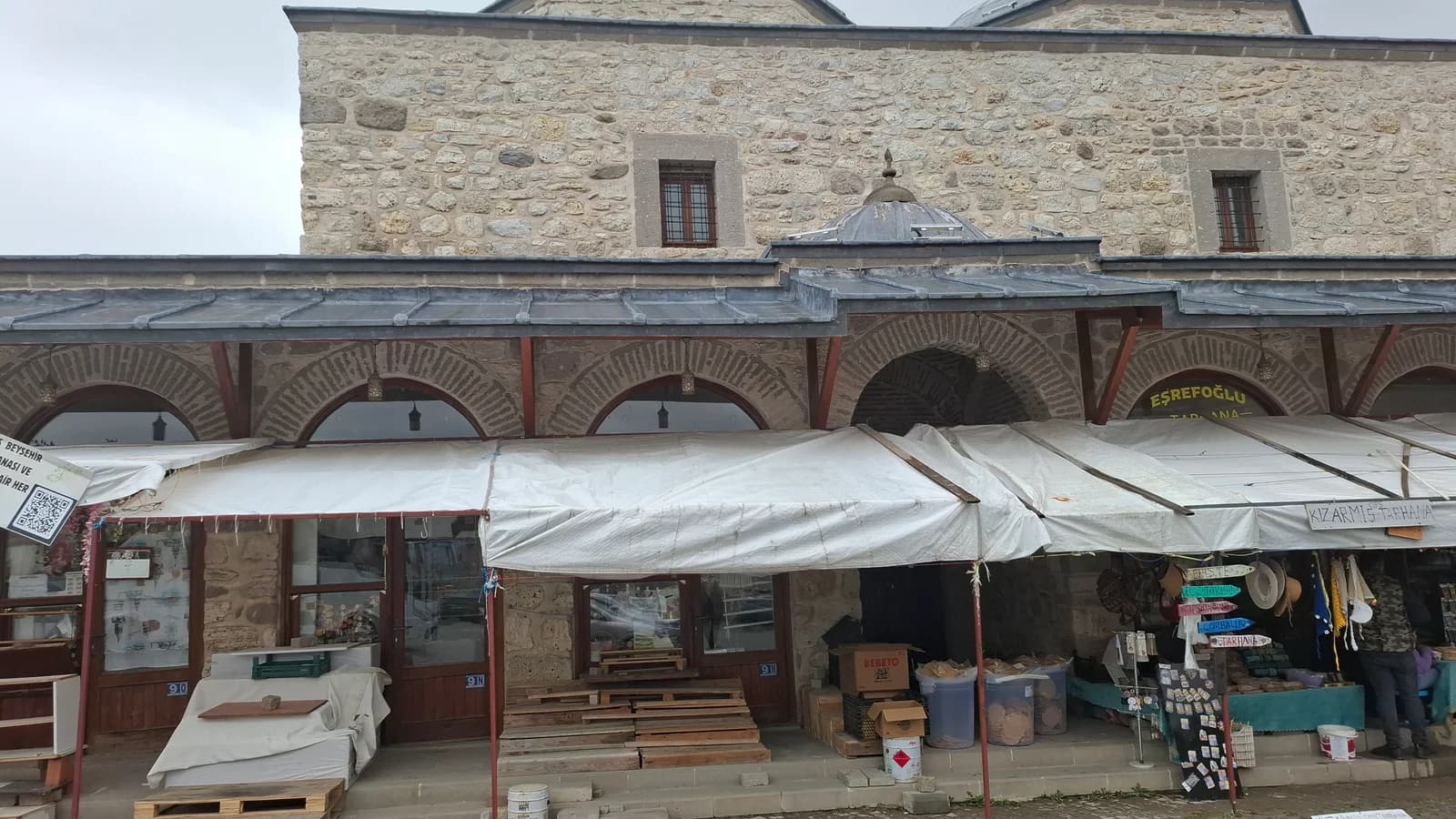
Building and trade
The municipal heritage survey places the bedesten among the structures around Eşrefoğlu Mosque and the bath. A bedesten was a covered commercial building; its presence marks the market functions of a town that is too often described only through religious monuments.[1][2]
Published descriptions assign different dates to phases of the market building, and later repairs complicate a single construction year. The reliable historical point is its place in the urban ensemble and the continuation of commercial use through later periods.[3][2]
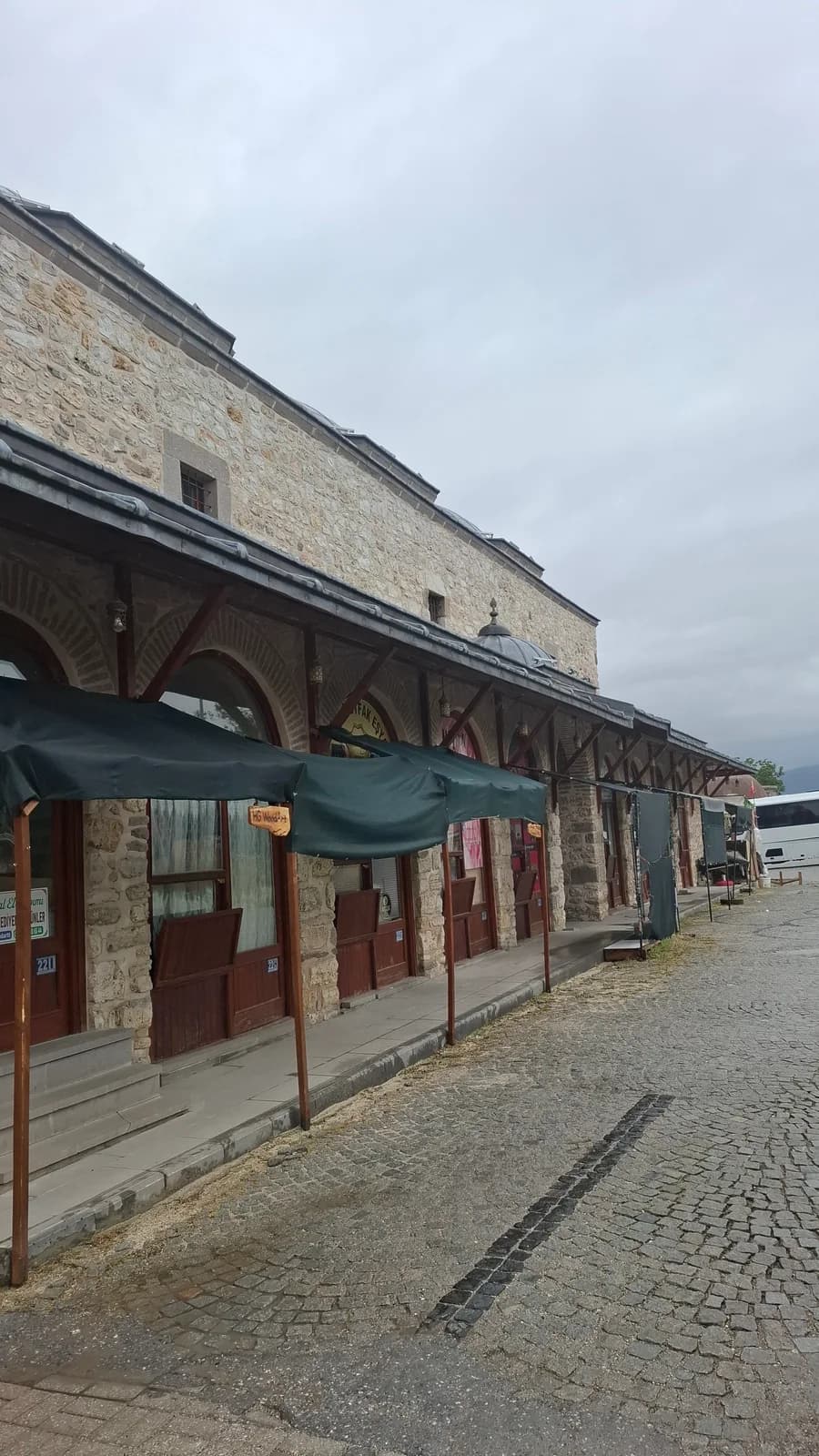
Reading the market
Architecture records a space for exchange, but specific traders and goods require documentary sources. Ottoman population and fiscal studies supply that broader context, turning the bedesten from an isolated stone building into part of a working town.[4][2]
Position and structure
Sait Kofoğlu places a market of thirty-one shops opposite the mosque in Süleyman Bey’s rebuilding of Beyşehir. The municipality dates completion of the covered building to 1299 alongside the mosque and describes its masonry domes. The number of shops describes the founder’s commercial programme, while the surviving masonry is the material record of one structure in that wider market.[5][6]
The bedesten is also called Bezzarlar Hanı in the local heritage guide, a name connecting it with cloth and textile traders. The nearby double bath stood to the west. This concentration of market, bath and mosque placed trade, public washing and congregational worship within walking distance in İçerişehir.[1][7]
Repairs and changing use
The municipality reports repair under Süleyman I in the sixteenth century and a General Directorate of Foundations restoration in 1975. The building’s stone and brick domes survive within those later interventions. It is presently described as an exhibition and meeting hall, a civic use different from its original market role.[6]
Those repairs complicate attempts to date every visible stone to 1299. The first foundation, Ottoman maintenance and modern conservation are all part of the building’s history. Its continued presence gives an unusually direct way to read the medieval commercial core alongside the better-known mosque.[6][8]
References
- 1Beyşehir Belediyesi · Beyşehir Tarih ve Kültür Mirası · Beyşehir Belediyesi · pp. 21–23
- 2M. Akif Erdoğru · Beyşehir - TDV İslâm Ansiklopedisi · Türkiye Diyanet Vakfı İslâm Ansiklopedisi · 1992
- 3Beyşehir Belediyesi · Beyşehir Tarih ve Kültür Mirası · Beyşehir Belediyesi
- 4Hüseyin Muşmal · XIX. Yüzyılın İlk Yarısında Beyşehir ve Çevresinin Sosyal ve Ekonomik Yapısı (1790-1864) · Selçuk Üniversitesi Sosyal Bilimler Enstitüsü Doktora Tezi · 2005
- 5Sait Kofoğlu · A Principality In Southwest Anatolia In The Post-Selçuk Era: Eşrefoğulları · SDÜ Fen Edebiyat Fakültesi Sosyal Bilimler Dergisi · 2009 · abstract
- 6Beyşehir Belediyesi · Bedesten · Beyşehir Belediyesi Gezi Rehberi
- 7M. Akif Erdoğru · Eşrefoğlu Seyfeddin Süleyman Bey Camiinin Vakıfları · Tarih İncelemeleri Dergisi 6/1, pp. 91–108 · 1991 · pp. 91–108
- 8Beyşehir Belediyesi · Beyşehir Tarih ve Kültür Mirası · Beyşehir Belediyesi · p. 23