
A closer look
A mosque is experienced through more than walls and roof. Textiles shape its visual and physical character too. The historical carpets associated with Eşrefoğlu open another route into the building’s past, following woven surfaces and the movement of objects between use, study and preservation. Portable things have histories that can differ from those of the buildings that once held them.
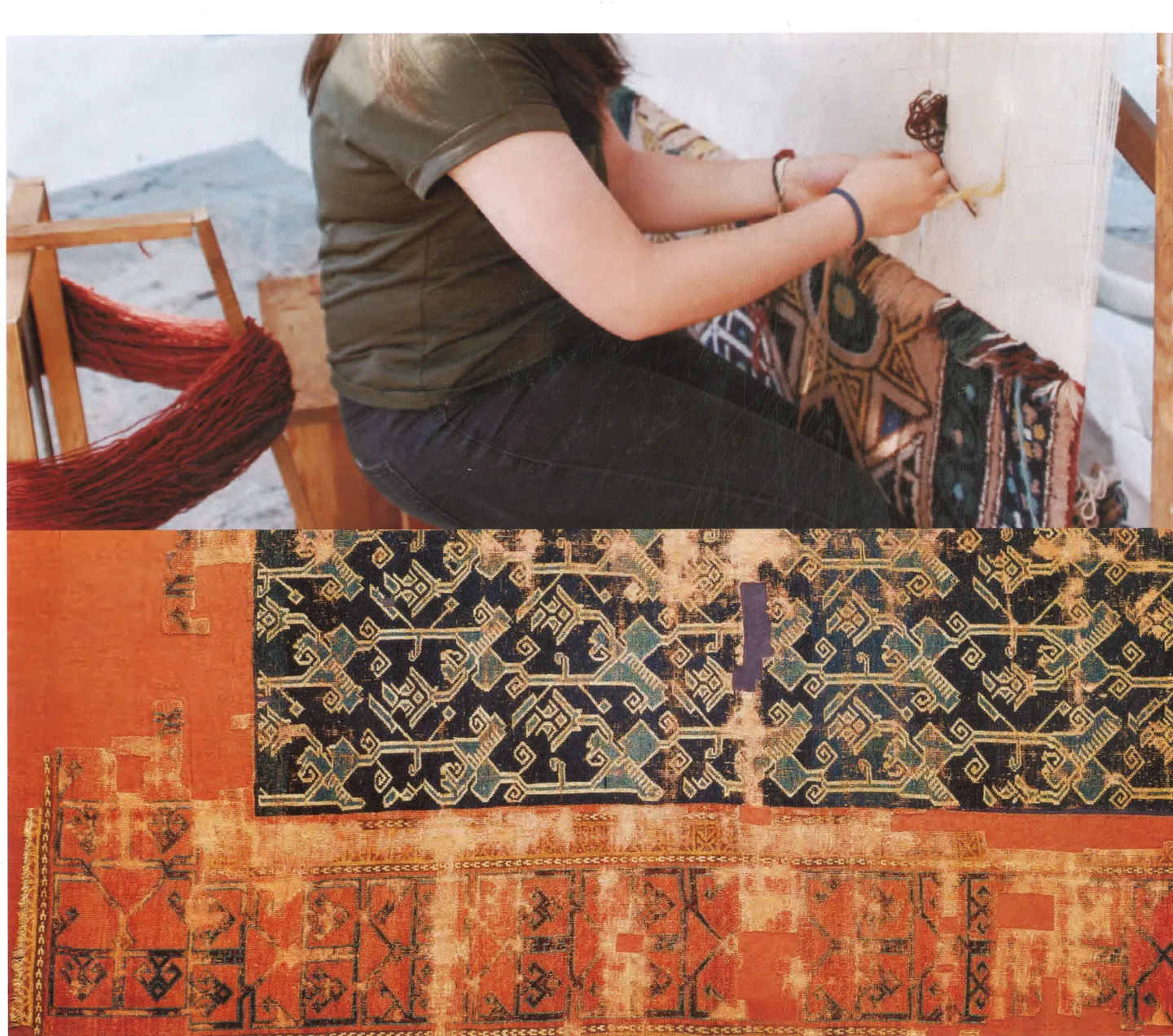
Mehmet Önder’s study of Seljuk carpets provides a specialist reference. It is a better starting point than treating every carpet in a modern interior photograph as medieval. A mosque can preserve an old framework while its everyday textiles change repeatedly. The object and the photograph therefore need separate dates, and a general weaving illustration cannot identify a particular historical carpet.
Details and connections
In a reproduction, distinguish the central field from borders. Follow repeated shapes and how a pattern approaches an edge. These observations make the design legible before questions of attribution or symbolism arise. Resemblance to carved wood can be a useful comparison, but cannot prove the same workshop made both objects.
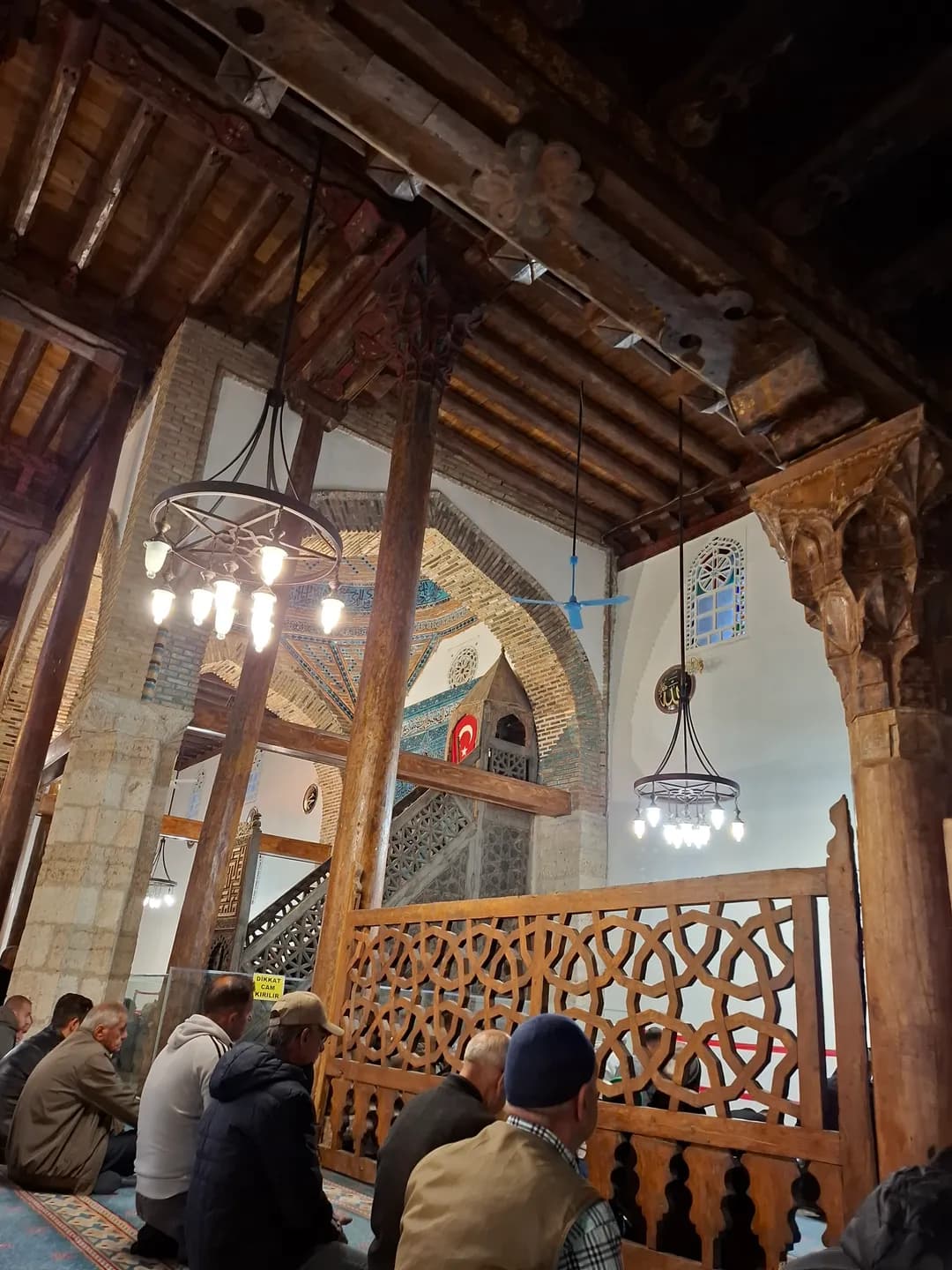
At Eşrefoğlu, columns establish spatial order, tilework concentrates attention at the prayer wall and textiles operate at floor level. Read each medium separately before considering their relationship. The weaving image here is contextual, not an identified Seljuk carpet. Follow the specialist reference for historical examples and check current museum arrangements before planning to see an object in person. This preserves the identities of the objects while revealing the range of skills gathered around a place of worship.
Reading the wider setting
Begin a textile image at its edge. Borders establish a frame, while the central field organises repeated forms within it. Follow one motif across the image and notice where it changes near a boundary. This makes the design easier to remember than trying to assign a symbolic meaning to every shape at once.
A fragment asks the viewer to recognise both presence and absence. Surviving pattern can be studied closely, but a missing section cannot simply be completed with the most attractive repetition. Distinguish the preserved object from a diagram or modern example used to explain how a larger design might have worked.
Continue your visit
Compare woven repetition with the mosque's columns and the geometric work of the minbar. Similar visual questions arise at different scales: how small units form a whole, how an edge is resolved and how material affects the result. The comparison does not require the objects to share a maker.
After the architectural visit, return to one photograph and write down what belongs to the building and what belongs to its furnishings. This simple separation makes changes over time easier to imagine. Palace tiles extends the material comparison, following another kind of decorated object between architectural setting, research and display.