Crossing the threshold
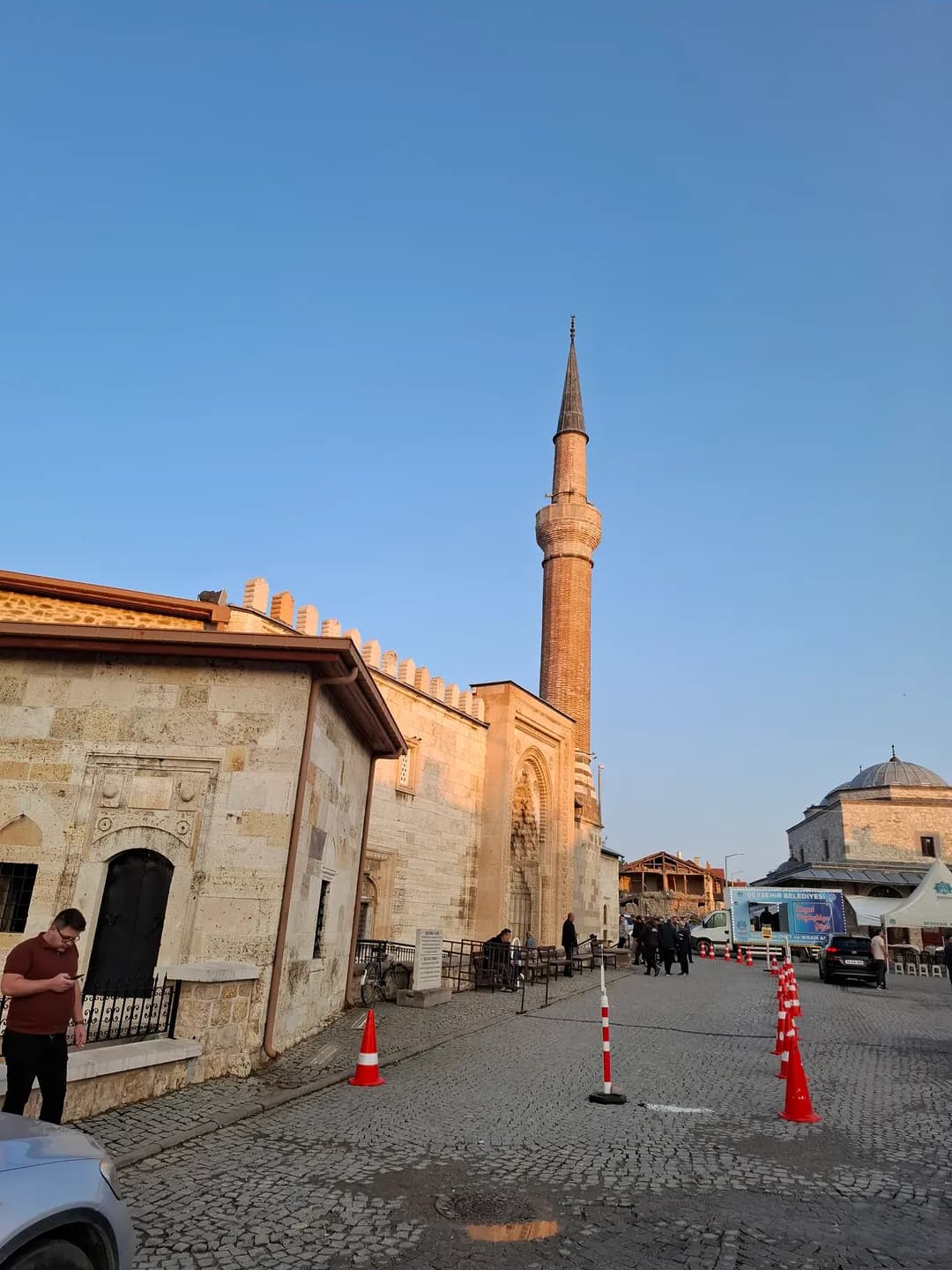
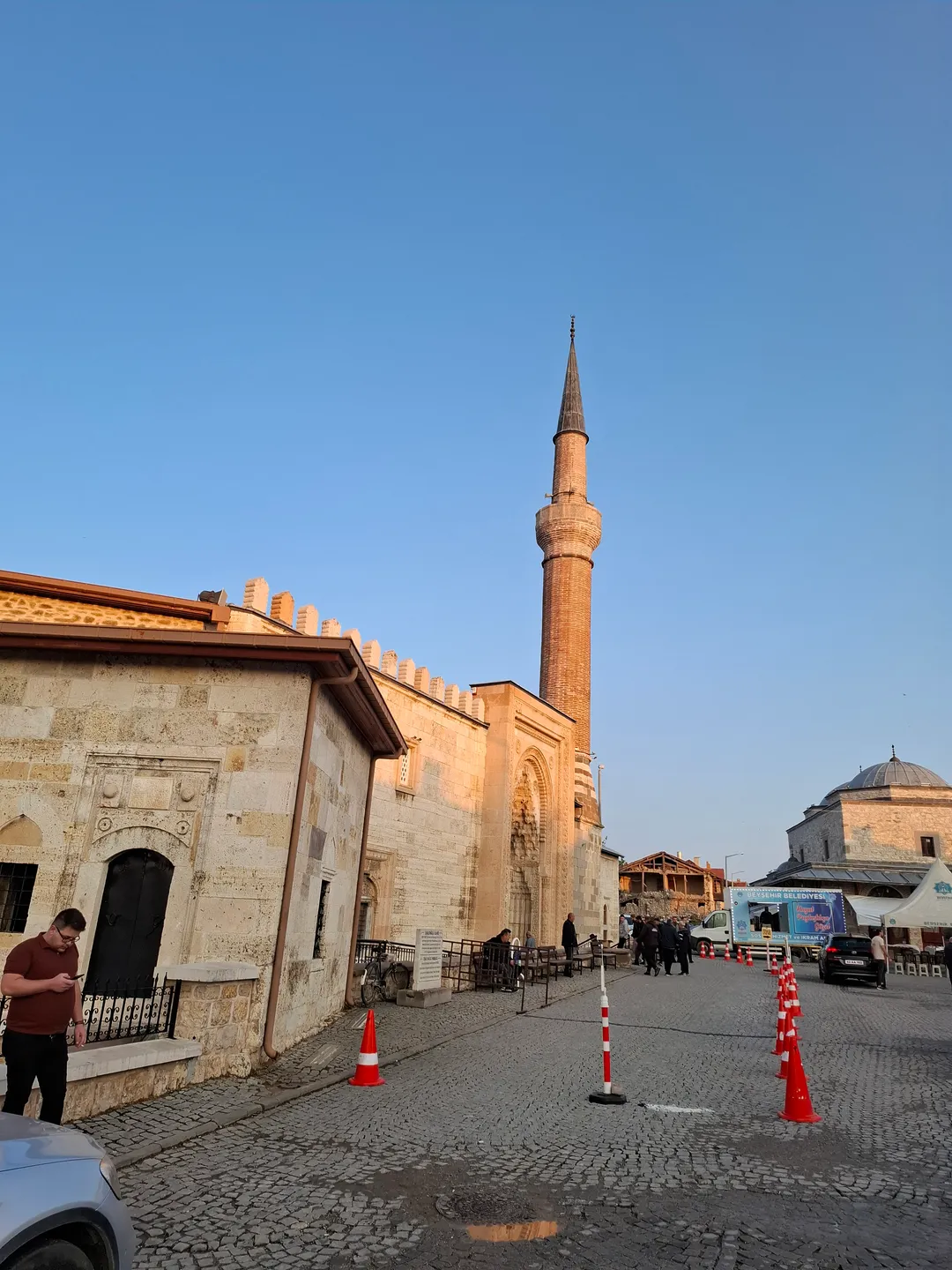
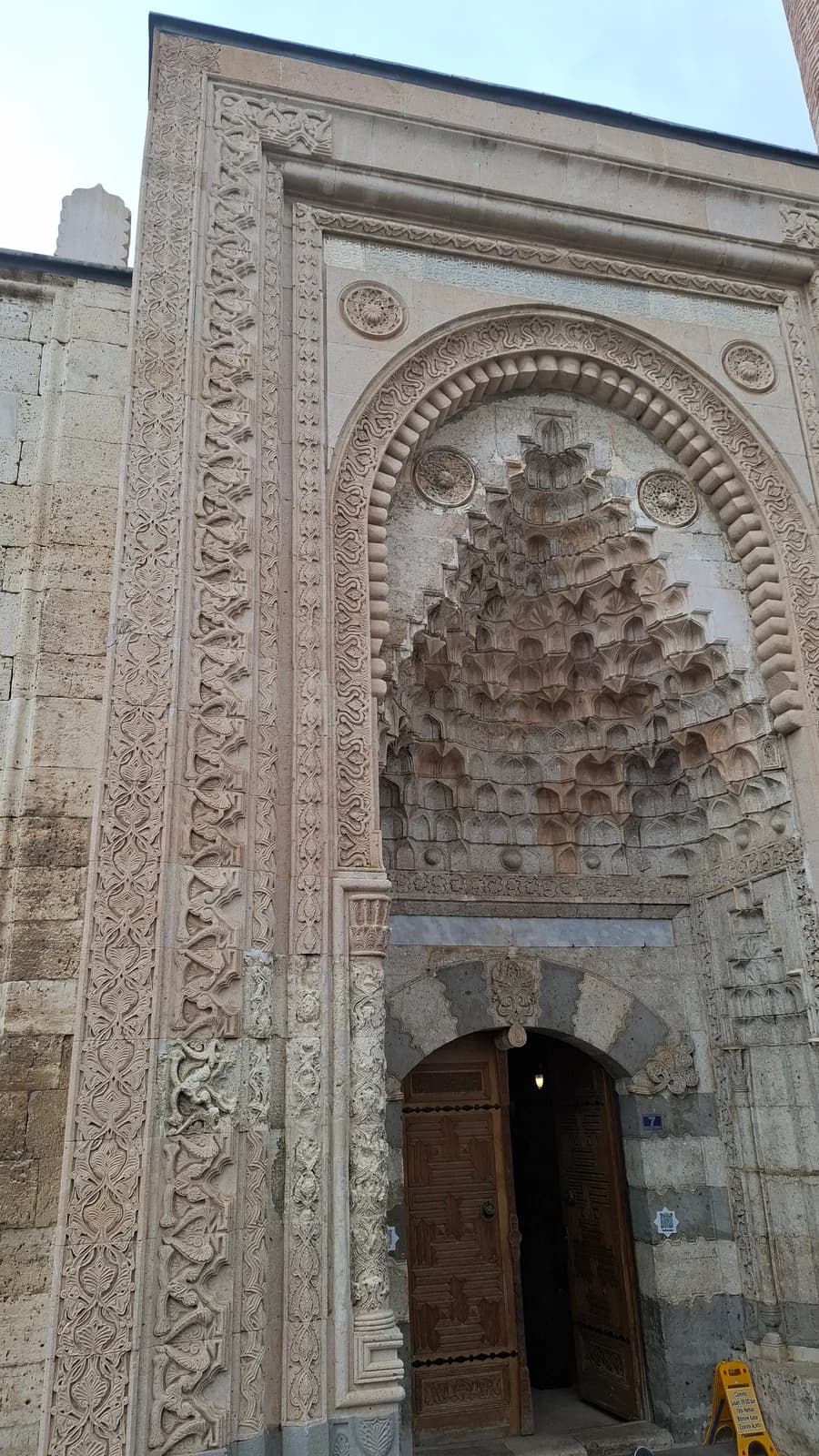
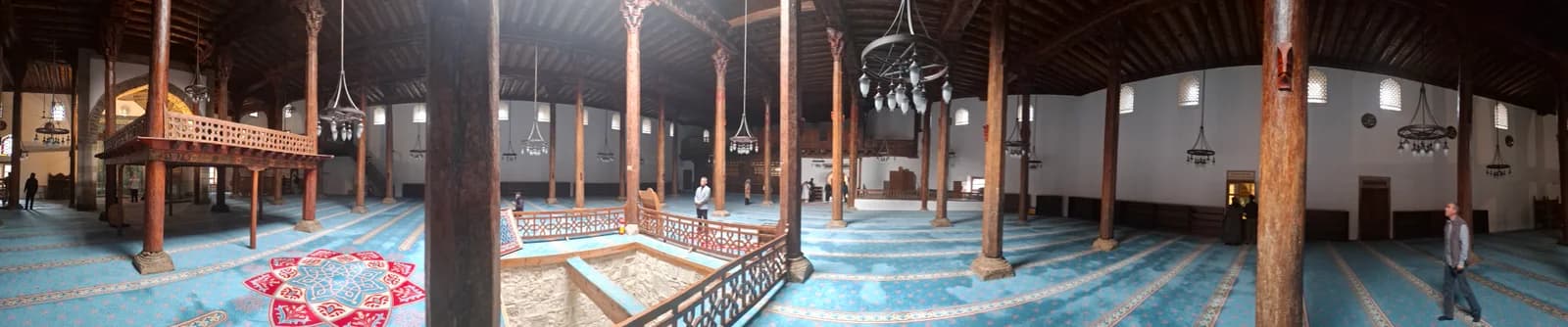
The first change at Eşrefoğlu Mosque is a change of material and rhythm. From the streets of İçerişehir, the building presents masonry walls and a carved stone entrance. Inside, rows of wooden supports organise the prayer hall and carry the eye towards the ceiling. Give yourself a moment to take in that transition. The interior is easier to understand when you first see the whole arrangement before concentrating on its ornament.
UNESCO dates the mosque to 1296–1299 and includes it in the serial World Heritage property of five medieval Anatolian wooden hypostyle mosques, inscribed in 2023. 'Hypostyle' describes a space supported by multiple columns. It is a useful word here because the supports are not isolated highlights: their repetition establishes the building's spatial character and the experience of moving through it.
Following the timber structure
Choose one column within the area open to visitors and follow the construction upwards with your eyes. The support meets a capital, then the beams and the structure above. Next, look along the row to see how that arrangement repeats. A single junction explains a piece of craftsmanship; the rows explain how many such decisions come together to make a substantial interior.
Try the same exercise from a different permitted position. Supports that appeared in a straight line can overlap, while passages between them become more or less visible. The change is small but revealing. It explains why an interior photograph from one angle never completely captures the hall and why the mosque rewards slow looking even when the visit itself is brief.
A mosque in its neighbourhood
The mosque was commissioned by Eşrefoğlu Süleyman Bey, according to the municipality's heritage account. It belongs to the late thirteenth-century world of the Eşrefoğlu principality, while carrying forward connections with Seljuk architectural traditions. İsmail Efe's study places the building within its wider complex. Patron, period and setting give the interior a historical address: this is a particular community's monumental project in İçerişehir, not an anonymous example of old timber architecture.
That distinction between setting and object is useful outside too. Stand where the entrance can be seen without blocking it and compare the scale of the portal with neighbouring streets. A monumental doorway announces a different kind of arrival from a house or shop entrance. The route towards it, the surrounding walls and the return to the street all belong to the experience of the building.
From columns to furnishings
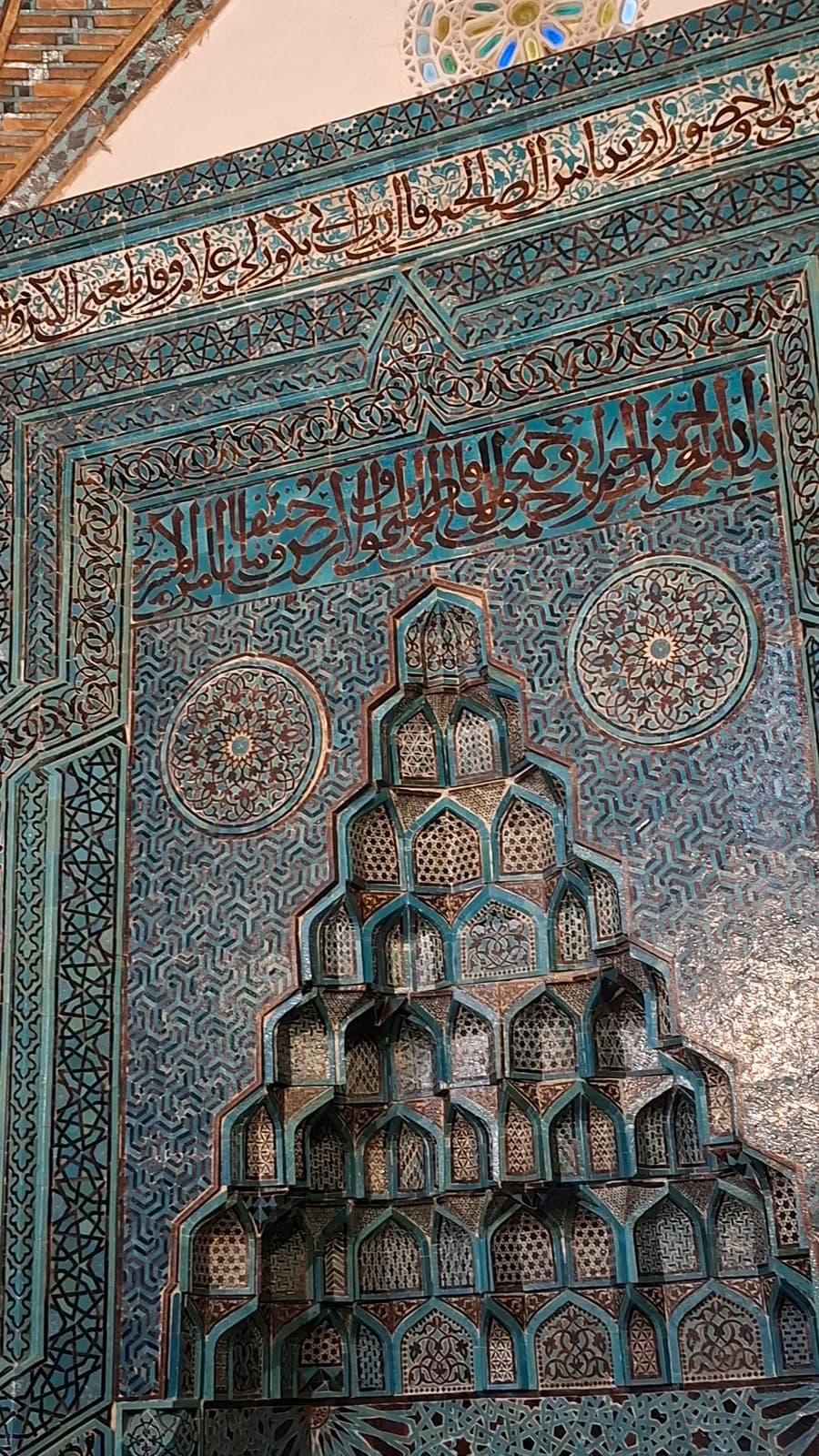
The prayer wall and pulpit bring other materials into focus. The municipality records a tile-mosaic mihrab about 4.58 metres wide and 6.17 metres high, and a walnut minbar assembled with intricate joinery. The mihrab indicates the direction of prayer; the minbar serves the sermon. Read Mihrab and minbar to follow the relationship between colour, geometric pattern and these different functions.
The mosque's craftsmanship also belongs to a wider Anatolian group. UNESCO's serial property includes mosques in Afyonkarahisar, Sivrihisar, Ankara and Kasaba alongside Beyşehir. Their shared combination of masonry enclosure and timber-supported interiors helps explain why Eşrefoğlu was recognised within a group. Its significance can be understood both through this wider building tradition and through the particular fittings and street setting encountered here.
A living place of worship
The mosque is a place of worship, and its continued use is part of its significance. Follow the arrangements at the entrance, dress and behave respectfully, and let worship determine whether and how a visit proceeds. Ask before photographing people and observe any restrictions on interior photography. A quiet, attentive visit can be rewarding without trying to document every corner or reaching every furnishing.
When you return outside, continue towards the Bedesten and the neighbouring bathhouse. Market, worship and everyday services form a more complete picture of the historic neighbourhood than a single monument considered alone. Their proximity invites comparison; it does not prove that every building belongs to one construction campaign or has followed the same history of repair.
Continue through İçerişehir
Use the old-town walk as a way of organising these encounters, with pauses rather than a race between pins. Look back at the mosque after seeing a smaller prayer building or a domestic doorway. The contrast in scale can make details easier to remember. Keep the current street environment in view as well: İçerişehir remains an inhabited place, with residents moving through the spaces visitors come to admire.
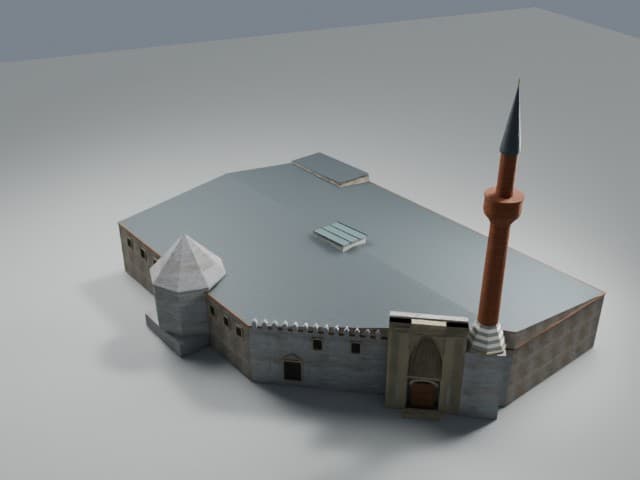
To continue reading, open Market memory for the architecture of exchange, Mihrab and minbar for the mosque's fittings, or Textile memory for another material history. The atlas can help you place the buildings in relation to one another before setting out. Its reconstructed forms explain location and volume; the actual stone, timber and living neighbourhood supply the details that make the visit memorable.