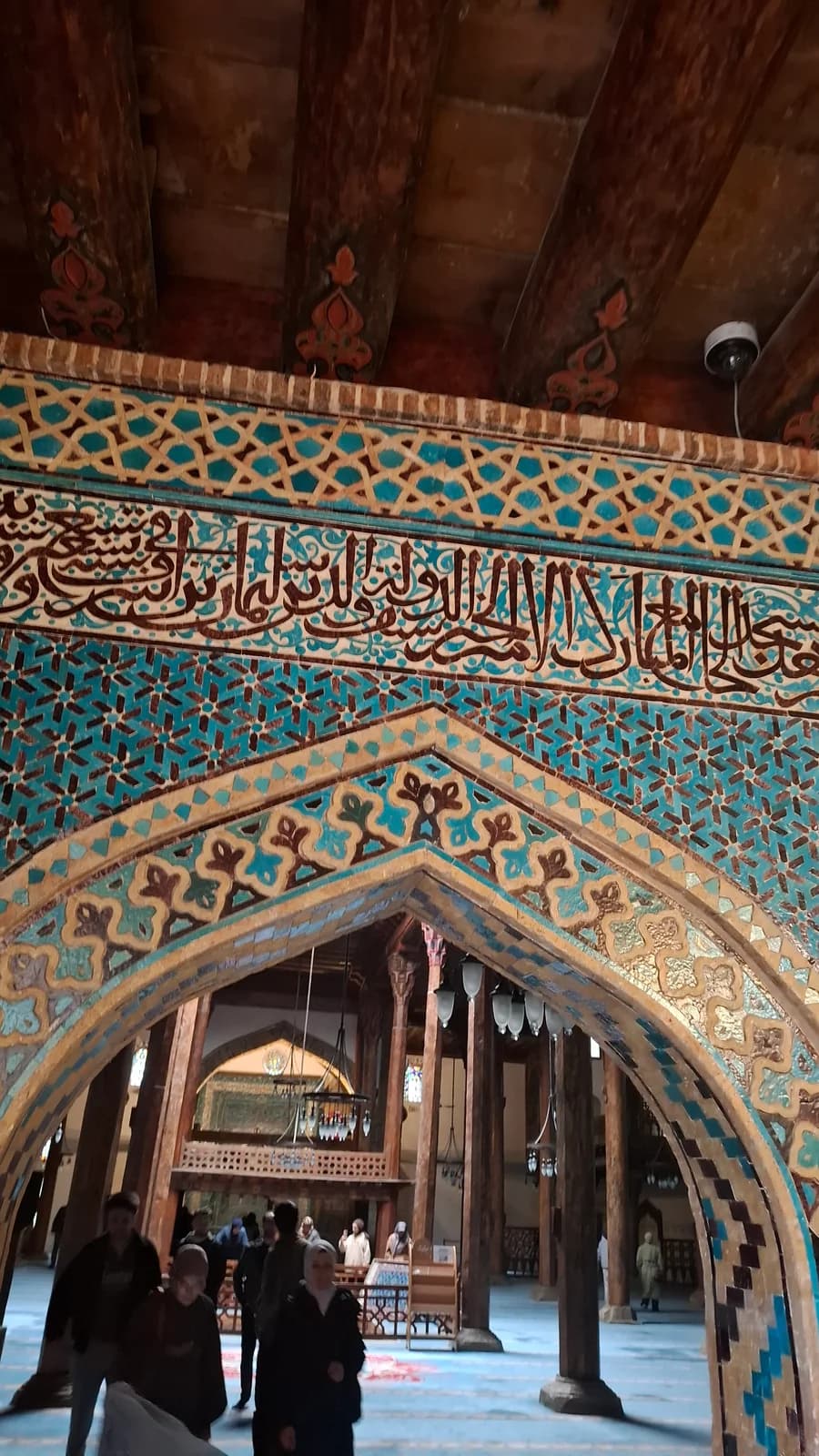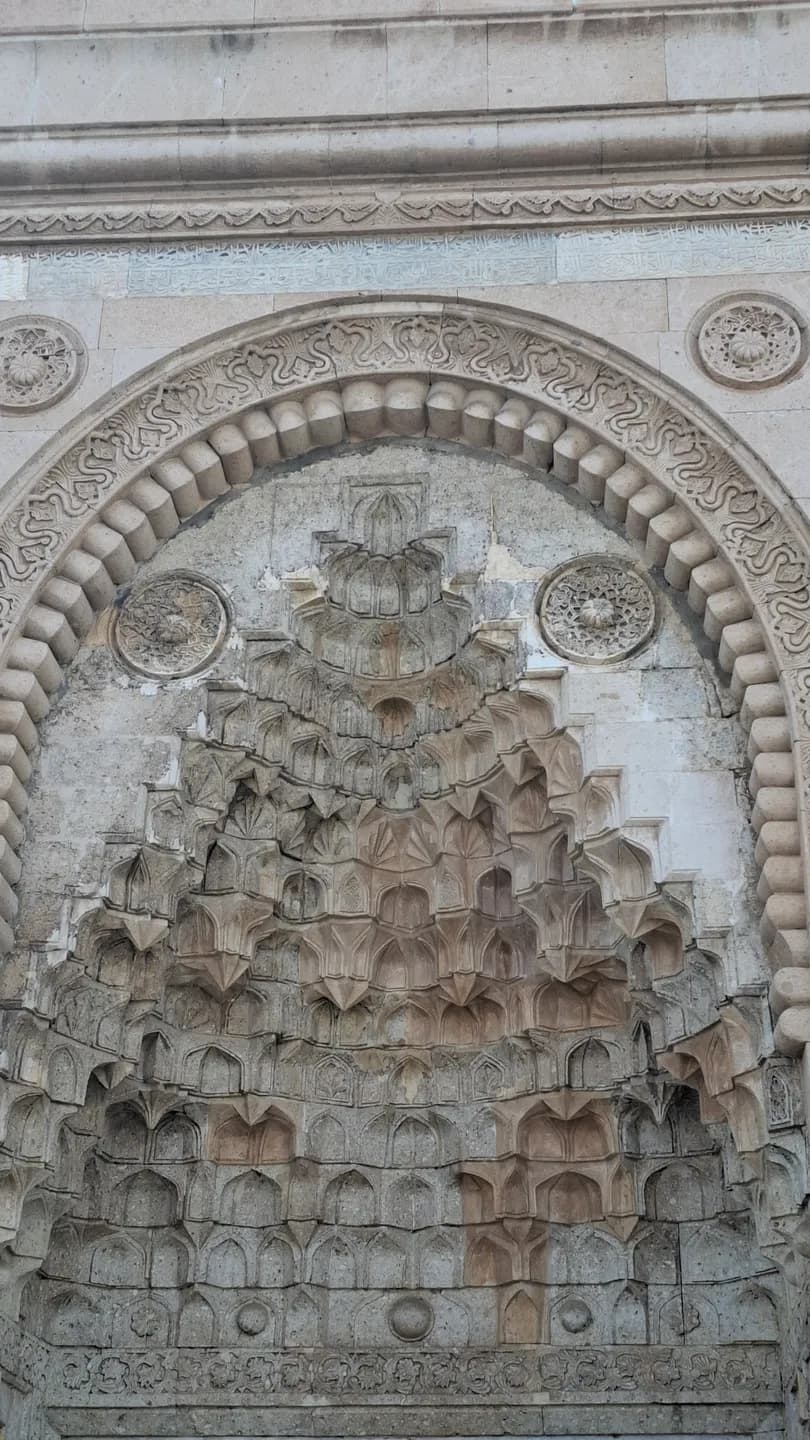
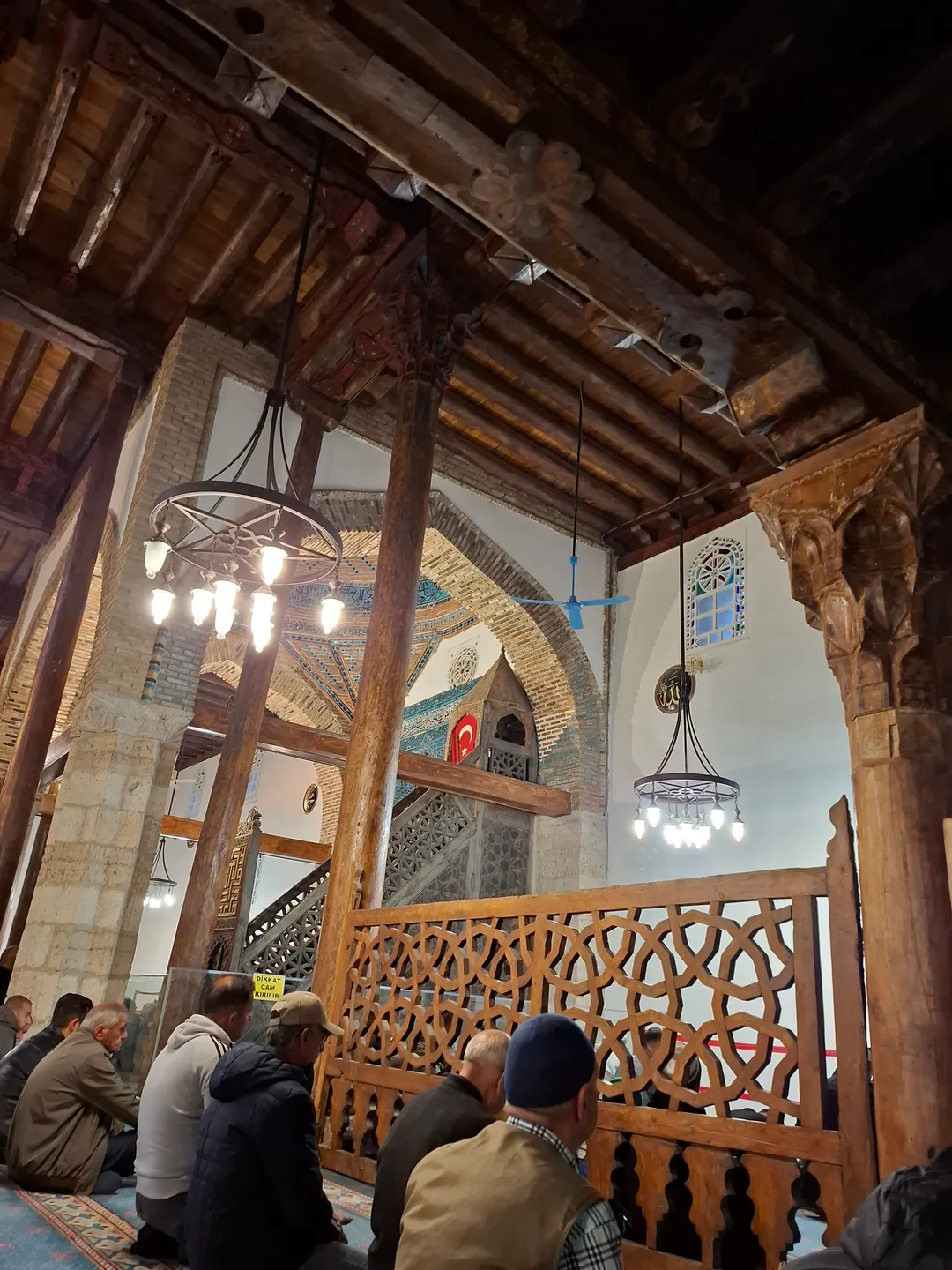
A closer look
The mihrab and minbar of Eşrefoğlu Mosque bring different materials and functions into conversation. The mihrab is the prayer niche associated with the direction of prayer; the minbar is the pulpit used for the sermon. Keeping those terms distinct makes the interior legible before attention turns to its decoration.
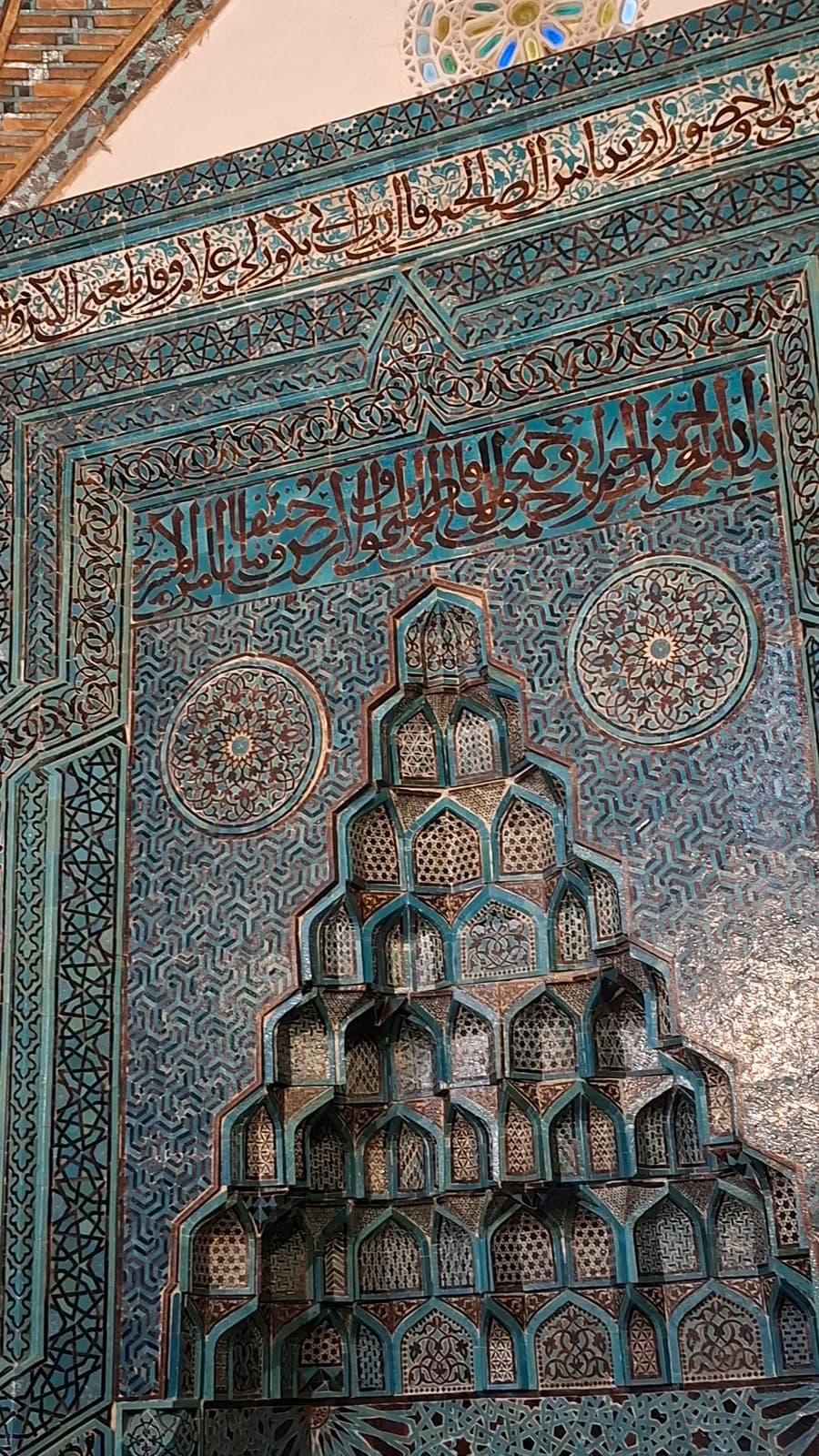
The tiled mihrab concentrates colour and pattern on the prayer wall. Begin with its frame, then look at the smaller units composing the surface. Tilework joins individual pieces into a larger design. A close photograph can reveal details difficult to see across the prayer hall, but cannot replace a measured account of the whole feature.
Details and connections
The wooden minbar asks a different question. Kündekâri is a system of joined wooden elements, here associated with an intricate geometric design. Consider how small parts form a constructed object, rather than reading the pattern as a flat picture. Material, joint and ornament belong to the same experience of looking. Efe’s monograph places these fittings within the building’s wider architecture.
Columns, ceiling, prayer wall and furnishings operate at different scales. Move your attention from the whole room to one surface and back again. Claims that a feature is the largest or finest need a defined comparison; careful description is more useful. Visit quietly, respect photography arrangements and avoid obstructing worship. Outside, the stone portal extends the comparison between materials beyond the interior.
Reading the wider setting
Take the room as your first frame. Notice how a furnishing stands within the larger arrangement of columns and sightlines before moving to its detail. The same decorated surface feels different in a tightly cropped photograph and in a view that shows its position in the prayer hall.
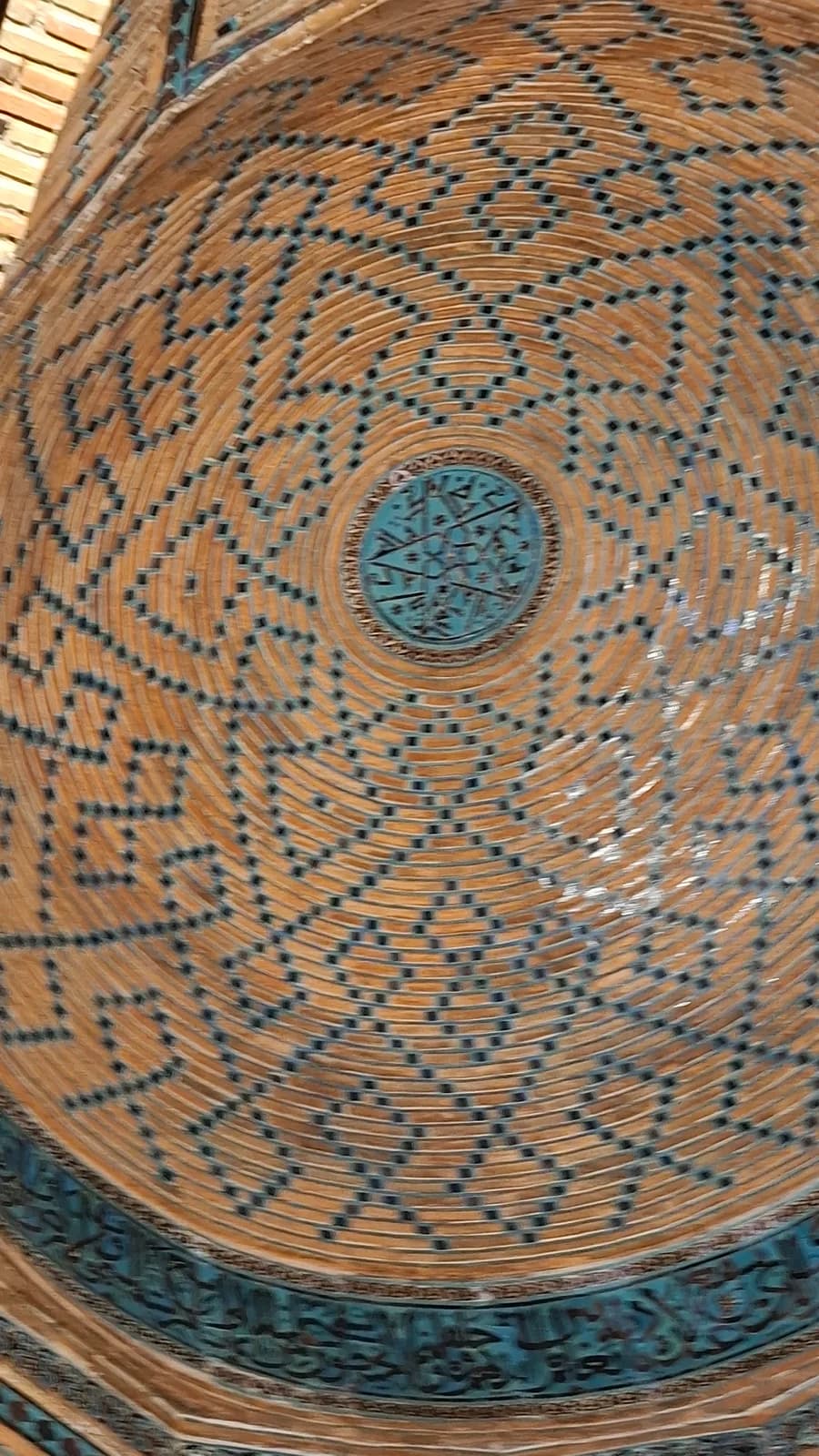
At the minbar, follow one geometric unit into its neighbours. The interest lies in the way a pattern becomes a constructed wooden object, with edges and changes of direction. Describe what you can see from the visitor area rather than trying to inspect hidden joins or test how a part moves.
Continue your visit
At the mihrab, compare the outer frame with the smaller elements within it. Colour, repetition and the shape of the niche direct attention in different ways. Looking from detail back to the whole wall helps explain why a feature can command the room without occupying all of it.
Textile memory brings the floor into the same conversation, while Palace tiles offers a comparison with decorated surfaces from a different kind of building. Return to A world held by wood afterwards to reconnect these objects with the mosque's structure, continuing use and place in İçerişehir.