
Reference overview
Tarih ve Kültür Mirası Beyşehir
Beyşehir Belediyesi · Beyşehir Belediyesi
Read the place guides and stories that draw on this source.
Read with your device’s voice.
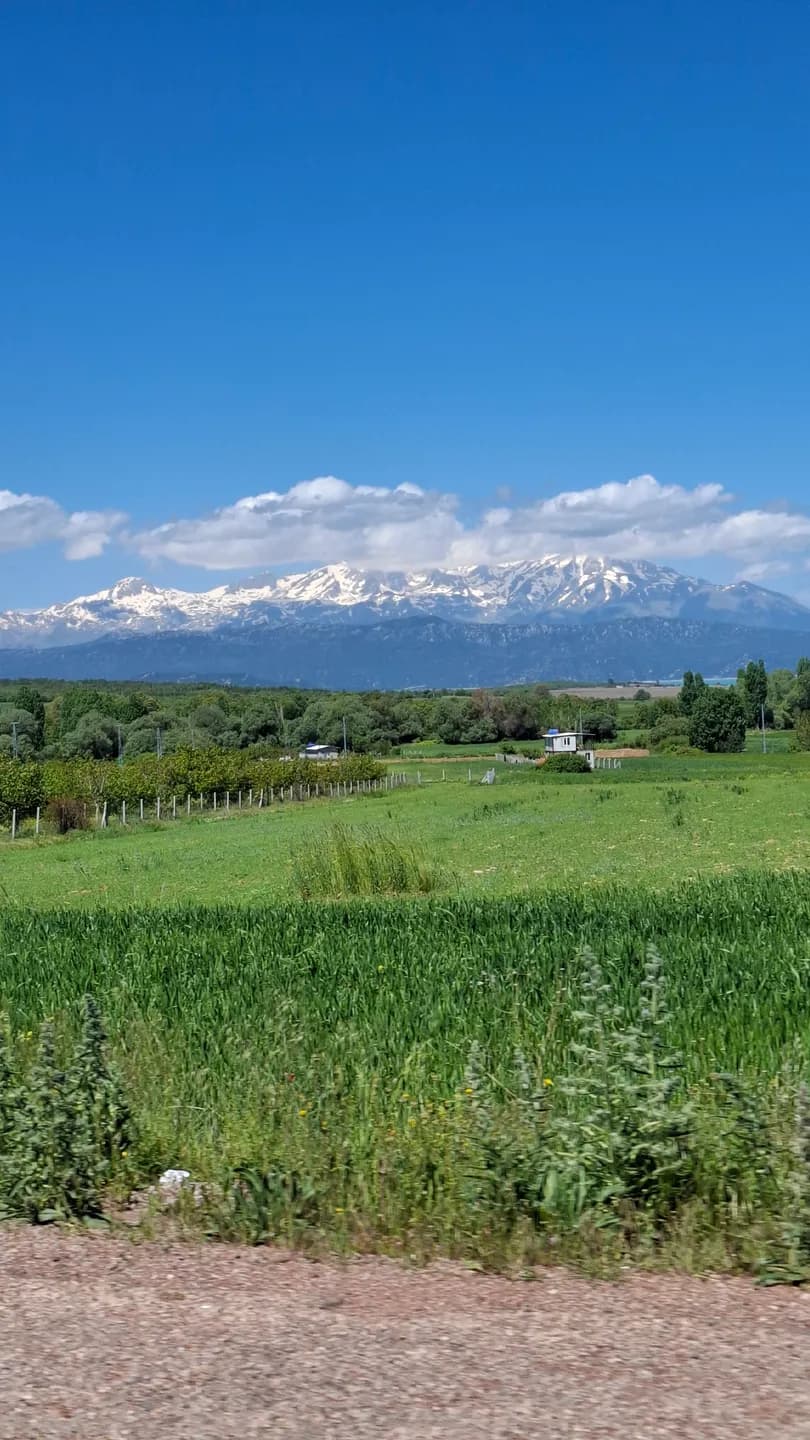
Dedegöl Peak
The highest mountain summit overlooking the Beyşehir basin and Mediterranean highlands.
From the lake, the Anamas mountains form a distant edge; travelling towards them changes that line into a landscape of slopes, valleys and much larger differences in height. The municipal guide places Anamas within the Taurus system. Read the mountains as their own environment, even when they have already appeared in almost every lakeside photograph.
Dedegöl and Karagöl are part of this wider mountain geography. The municipality introduces Karagöl in the high country around Dedegöl. A mountain lake and a summit are distinct objectives. Choose the experience that suits your group, then arrange its approach, trailhead and return with a local specialist.
The contrast with Beyşehir's waterfront is a useful starting point. At the shore, distance is often read across water; in the mountains, slope and changes in level shape the journey. A place that appears close in a flat map may involve terrain that changes the time, effort and preparation needed to reach it.
Use the photographs to understand the landscape at different scales. A broad mountain view shows the setting; a specifically identified Karagöl image introduces the water landscape within it. Use the captions to connect each photograph with its named place. Compare the ridge, slopes and water to build a picture of the wider mountain setting.
Before choosing an outing, decide whether you want a viewpoint approached by road, a short permitted walk or a mountain objective requiring specialist planning. Discuss the actual start, route, current conditions and return arrangements with someone who knows the terrain. The choice of objective should come before a distance target.
Season, exposure and weather can change a mountain day substantially. Carry suitable equipment for the plan that has actually been checked, and agree in advance when to turn back. Get a current route assessment and navigation plan from your local guide before committing to the day’s objective.
İslibucak forest offers a different kind of outing in the wooded regional landscape. Subterranean rivers explores how water shapes the cave country, while Lake life returns to the broad basin below. Read them together to understand how varied the region is without treating forest, cave and alpine activities as interchangeable.
Back at the waterfront, look again at the skyline. Even a journey limited to an accessible viewpoint can make that distant line more meaningful. The mountains stop being a decorative background and become a set of places with their own terrain, named destinations and separate stories.
Karagöl Glacial Tarn
A turquoise alpine glacial tarn nestled amidst sheer limestone cliffs.
From the lake, the Anamas mountains form a distant edge; travelling towards them changes that line into a landscape of slopes, valleys and much larger differences in height. The municipal guide places Anamas within the Taurus system. Read the mountains as their own environment, even when they have already appeared in almost every lakeside photograph.
Dedegöl and Karagöl are part of this wider mountain geography. The municipality introduces Karagöl in the high country around Dedegöl. A mountain lake and a summit are distinct objectives. Choose the experience that suits your group, then arrange its approach, trailhead and return with a local specialist.
The contrast with Beyşehir's waterfront is a useful starting point. At the shore, distance is often read across water; in the mountains, slope and changes in level shape the journey. A place that appears close in a flat map may involve terrain that changes the time, effort and preparation needed to reach it.
Use the photographs to understand the landscape at different scales. A broad mountain view shows the setting; a specifically identified Karagöl image introduces the water landscape within it. Use the captions to connect each photograph with its named place. Compare the ridge, slopes and water to build a picture of the wider mountain setting.
Before choosing an outing, decide whether you want a viewpoint approached by road, a short permitted walk or a mountain objective requiring specialist planning. Discuss the actual start, route, current conditions and return arrangements with someone who knows the terrain. The choice of objective should come before a distance target.
Season, exposure and weather can change a mountain day substantially. Carry suitable equipment for the plan that has actually been checked, and agree in advance when to turn back. Get a current route assessment and navigation plan from your local guide before committing to the day’s objective.
İslibucak forest offers a different kind of outing in the wooded regional landscape. Subterranean rivers explores how water shapes the cave country, while Lake life returns to the broad basin below. Read them together to understand how varied the region is without treating forest, cave and alpine activities as interchangeable.
Back at the waterfront, look again at the skyline. Even a journey limited to an accessible viewpoint can make that distant line more meaningful. The mountains stop being a decorative background and become a set of places with their own terrain, named destinations and separate stories.
Eşrefoğlu Seljuk Carpets
The Seljuk carpet heritage discovered at Eşrefoğlu Mosque in 1905 and preserved in world museums.
A mosque is experienced through more than walls and roof. Textiles shape its visual and physical character too. The historical carpets associated with Eşrefoğlu open another route into the building’s past, following woven surfaces and the movement of objects between use, study and preservation. Portable things have histories that can differ from those of the buildings that once held them.
Mehmet Önder’s study of Seljuk carpets provides a specialist reference. It is a better starting point than treating every carpet in a modern interior photograph as medieval. A mosque can preserve an old framework while its everyday textiles change repeatedly. The object and the photograph therefore need separate dates, and a general weaving illustration cannot identify a particular historical carpet.
In a reproduction, distinguish the central field from borders. Follow repeated shapes and how a pattern approaches an edge. These observations make the design legible before questions of attribution or symbolism arise. Resemblance to carved wood can be a useful comparison, but cannot prove the same workshop made both objects.
At Eşrefoğlu, columns establish spatial order, tilework concentrates attention at the prayer wall and textiles operate at floor level. Read each medium separately before considering their relationship. The weaving image here is contextual, not an identified Seljuk carpet. Follow the specialist reference for historical examples and check current museum arrangements before planning to see an object in person. This preserves the identities of the objects while revealing the range of skills gathered around a place of worship.
Begin a textile image at its edge. Borders establish a frame, while the central field organises repeated forms within it. Follow one motif across the image and notice where it changes near a boundary. This makes the design easier to remember than trying to assign a symbolic meaning to every shape at once.
A fragment asks the viewer to recognise both presence and absence. Surviving pattern can be studied closely, but a missing section cannot simply be completed with the most attractive repetition. Distinguish the preserved object from a diagram or modern example used to explain how a larger design might have worked.
Compare woven repetition with the mosque's columns and the geometric work of the minbar. Similar visual questions arise at different scales: how small units form a whole, how an edge is resolved and how material affects the result. The comparison does not require the objects to share a maker.
After the architectural visit, return to one photograph and write down what belongs to the building and what belongs to its furnishings. This simple separation makes changes over time easier to imagine. Palace tiles extends the material comparison, following another kind of decorated object between architectural setting, research and display.
Erbaba Höyük & Neolithic Stone Architecture
Contiguous stone-founded Neolithic houses uncovered through the excavations of Jacques and Louise Bordaz.
The Beyşehir basin’s history begins long before its standing medieval monuments. Erbaba Höyük belongs to the region’s prehistoric settlement story. Considering it alongside mosque, bridge and lakeside town changes the timescale of a visit: people lived in this landscape long before the buildings that now dominate an architectural tour.
A höyük is a mound formed through accumulated occupation and rebuilding, not a single intact building. Archaeological interpretation draws on excavation contexts and the relationship between layers. A visitor looking at a rise in the landscape cannot reproduce that investigation simply by imagining houses upon it.
The district history identifies Erbaba among early settlements. Detailed claims about individual houses or entry from rooftops require excavation publications. Similarity to another Anatolian site is a question to investigate, not permission to import a familiar reconstruction from Çatalhöyük. The same applies to the surroundings: modern fields and shoreline are not a frozen image of the prehistoric environment.
Use Erbaba as a reason to read the basin across several periods. The regional photograph provides context, not a reconstruction or an image of the excavation itself. Establish access separately, avoid walking on protected remains and never collect material. Distinguishing excavated evidence from a suggested interpretation allows the earliest chapter of the region’s story to retain its own questions, rather than becoming a decorative preface to the medieval town.
Reading a mound requires a different pace from visiting a standing monument. There may be no complete facade to photograph and no single room to enter. The interest lies in how archaeological investigation turns relationships between deposits, objects and construction traces into an account of repeated occupation.
Think about the difference between the landscape you can see and a past environment reconstructed through research. A modern shoreline, field boundary or road is a present reference point. It helps locate a visit, but does not automatically explain how the same ground was used in prehistory.
Place Erbaba on a timeline with the Hittite monuments and Eşrefoğlu Mosque. The spaces between those chapters matter as much as the labels. They prevent the region's history from appearing as a smooth procession of buildings and remind you that many forms of life leave less immediately visible remains.
Heritage layers provides that longer view, while Lake life returns to the basin's changing edges. Use them to plan a reading journey even if a site visit is not possible. The value of the prehistoric chapter lies in changing the questions you ask about the region, not simply adding another pin.
Giant on the Slope: The Fasıllar Monolith
One of Anatolia’s largest monolithic sculptures, the 8-metre Kurtbeşiği monument.
At Fasıllar, scale is impossible to ignore. An image worked into one substantial stone raises questions about planning, carving and placement. These are the starting points for a visit, rather than questions that a dramatic caption can settle. The relationship between the object and the ground is as important as an isolated view of a carved figure.
Municipal accounts place the monument within Hittite heritage. Its visual language connects it with a wider tradition, while it remains a particular object in a particular setting. Begin with the whole form before separating elements of its composition. A comparison with Eflatunpınar reveals differences between a monolith and a structure assembled from blocks beside water.
Accounts sometimes propose a connection with another site or an intended transport. Those proposals are interpretations, not eyewitness records of a failed operation. The reason an object stayed in one place, its proposed destination and its original function need specific evidence. Size alone does not supply all those answers.
Leave time to study the surrounding setting without climbing the monument. Nearby classical heritage belongs to another historical chapter and needs separate labels. Contextual images from other sites are named accordingly, never presented as photographs of this object. A good regional journey is a sequence of distinct places with published evidence and open questions, rather than a blur of ancient dates and borrowed descriptions.
From a suitable viewing position, let the stone's outline guide your first look. Separate the outer mass from the carved composition and then bring them back together. This makes it easier to see how the image occupies the available surface rather than imagining the relief as an independent object.
Compare a wide photograph with a detail taken from the same permitted area. The wide view preserves scale and terrain; the detail makes an individual contour easier to study. Keep both, because an impressive close-up can otherwise erase the physical relationship that first caught your attention.
The comparison with Eflatunpınar is most useful when it begins with things you can identify: one large stone, multiple joined blocks, a hillside setting and a spring pool. These observations provide a clear foundation for reading specialist interpretations without confusing an attractive proposal with an established construction sequence.
Ares and Lukyanos introduces a different historical layer in the wider district. Reading stone brings the regional comparisons together, while Heritage layers supplies a longer chronology. Allow those connections to widen the visit, but give each monument its own caption, evidence and place in your notes.
The Eşrefoğlu Minbar & Tile-Mosaic Mihrab
Nail-free walnut joinery minbar and 6-metre-high monumental turquoise tile-mosaic mihrab.
The mihrab and minbar of Eşrefoğlu Mosque bring different materials and functions into conversation. The mihrab is the prayer niche associated with the direction of prayer; the minbar is the pulpit used for the sermon. Keeping those terms distinct makes the interior legible before attention turns to its decoration.
The tiled mihrab concentrates colour and pattern on the prayer wall. Begin with its frame, then look at the smaller units composing the surface. Tilework joins individual pieces into a larger design. A close photograph can reveal details difficult to see across the prayer hall, but cannot replace a measured account of the whole feature.
The wooden minbar asks a different question. Kündekâri is a system of joined wooden elements, here associated with an intricate geometric design. Consider how small parts form a constructed object, rather than reading the pattern as a flat picture. Material, joint and ornament belong to the same experience of looking. Efe’s monograph places these fittings within the building’s wider architecture.
Columns, ceiling, prayer wall and furnishings operate at different scales. Move your attention from the whole room to one surface and back again. Claims that a feature is the largest or finest need a defined comparison; careful description is more useful. Visit quietly, respect photography arrangements and avoid obstructing worship. Outside, the stone portal extends the comparison between materials beyond the interior.
Take the room as your first frame. Notice how a furnishing stands within the larger arrangement of columns and sightlines before moving to its detail. The same decorated surface feels different in a tightly cropped photograph and in a view that shows its position in the prayer hall.
At the minbar, follow one geometric unit into its neighbours. The interest lies in the way a pattern becomes a constructed wooden object, with edges and changes of direction. Describe what you can see from the visitor area rather than trying to inspect hidden joins or test how a part moves.
At the mihrab, compare the outer frame with the smaller elements within it. Colour, repetition and the shape of the niche direct attention in different ways. Looking from detail back to the whole wall helps explain why a feature can command the room without occupying all of it.
Textile memory brings the floor into the same conversation, while Palace tiles offers a comparison with decorated surfaces from a different kind of building. Return to A world held by wood afterwards to reconnect these objects with the mosque's structure, continuing use and place in İçerişehir.
Taş Madrasah & Ilkhanid Stone Cenotaphs
Intricately carved stone sarcophagi and fine epigraphy preserved in the courtyard of İsmail Ağa Madrasah.
Fourteenth-century Beyşehir can be approached through words preserved on funerary monuments as well as standing buildings. İbrahim Kunt, Hüseyin Muşmal and Mustafa Çetinaslan study five sandukas associated with İsmail Ağa’s period, bringing history, language and the close examination of carved stone together.
A sanduka is a tomb chest or funerary monument, not automatically a Roman sarcophagus still standing over its original burial. Location is important: the study records examples in Vuslat Park, towards Sevgi Island and in the Yarım Türbe within the Eşrefoğlu complex. It does not place all five inside the medrese, and an account of the period should preserve that distinction.
The researchers discuss Arabic identity and death-date texts at the ends and Persian writing along the sides. Looking at only one face therefore gives an incomplete account. Form, script and language all contribute to meaning. They also distinguish securely established original locations from proposed associations with religious institutions. A plausible association remains a proposal when academic work is adapted for visitors.
Use the medrese as part of the wider historical setting while keeping individual monuments separate. The study records the situation at the time of research, not a current display inventory. Follow local access information and never wet, rub or touch an inscription to improve visibility. Comparison with published documentation is more useful, preserving both the stone and the limits of what can be read.
Begin a commemorative stone with its overall form before attempting the writing. A surface belongs to an object with sides, ends and a position in a wider setting. Photographs of separate faces can help explain that arrangement, but should be labelled so the reader knows when several images show one monument.
Names and dates introduce individual lives into a town history often told through rulers and buildings. Notice what the published study can establish from the inscription and where biography remains incomplete. A short recorded text can be historically valuable without supplying a continuous narrative of a person's life.
Compare the languages and kinds of wording discussed in the research. Identification, date and a commemorative passage may serve different purposes within the same object. Reading them as one undifferentiated block of decoration would miss how text organises remembrance as well as the surface of the stone.
Chechen and Ingush migration offers another account built from recorded memorials, in a different historical context. Ares and Lukyanos extends the comparison to classical inscription. Together these readings show why an inscription's place, language and documented recording matter as much as the fact that words survive on stone.
Beyşehir in Travelers’ Accounts
Eastern and Western voyagers describing Eşrefoğlu Mosque, Kubadabad tiles and island communities.
Travel writing offers an earlier Beyşehir through the choices of people passing through. One visitor notices a building, another a crossing or the circumstances of a stay. These observations can be valuable, but they are selections rather than a complete inventory. Reading them beside the present-day town is a rewarding exercise precisely because the views differ.
Hüseyin Muşmal’s study compares travel accounts and works of historical geography. Descriptions from different dates and purposes reveal changes in emphasis as well as possible changes in places. A memorable sentence cannot carry a neighbourhood’s entire history. Nor should a later summary be mistaken for the original traveller’s exact words.
The writer’s position matters. A short-term visitor and a resident do not see the same town, and an account may have been edited or translated long after the journey. Travel date, publication date and photograph date are different evidence. The historical aerial illustration here provides urban context; it does not prove a traveller’s precise route or establish every old street name’s modern equivalent.
Choose one visible feature and compare its treatment in the sources. Ask what a writer observed directly and what was reported second-hand. Avoid turning an uncertain identification into a plaque-like certainty. Moving between place and text while retaining differences between witnesses produces a richer reading walk than collecting quotations detached from their setting.
Read a travel account with a small set of questions in mind: who is speaking, when did the visit take place and what brought the writer to the town? A description prepared for other travellers may notice different things from a geographical survey or a personal recollection.
Choose a recognisable subject, such as the lake or a crossing, and compare how two accounts frame it. One may emphasise movement, another appearance or the circumstances of a stay. Difference is useful evidence of perspective, even when neither passage can settle a precise architectural question.
Then make your own short description from a public viewpoint. Record the date and distinguish what you saw from what you had already read. Revisiting that note afterwards is a practical way to understand how every account selects and arranges details, including your own.
Market memory and Water and city offer places for this exercise, while Wartime Beyşehir introduces a very different kind of temporary presence. Read the journeys in their own circumstances rather than treating every visitor as a tourist. The reason someone arrived shapes what their account can tell us.
The WWII Beyşehir Internment Camp
The story of German naval personnel interned in Beyşehir during 1944–1945.
Beyşehir’s twentieth-century history includes compulsory residence far removed from a normal lakeside visit. Hüseyin Muşmal and Hasret Gümüş examine German naval personnel held in the town during the closing phase of the Second World War. Their research draws on memoirs, diaries and accounts from people connected with the events.
Identify the subject precisely: approximately 320 German naval servicemen, not an undifferentiated group of civilians and soldiers. The wider September 1944–July 1946 chronology spans different locations and circumstances. The study distinguishes roughly eight months in Beyşehir from the later period in Isparta. The whole interval must not be described as time spent in Beyşehir.
Events in the Black Sea and Turkey’s changing wartime position provide context. Internment is not a voluntary holiday, even when memoirs describe ordinary activities or encounters with residents. Administrative status, restrictions and transfer are part of the history. A diary conveys its author’s perspective; a later interview may remember the period differently. Neither justifies claiming everybody had the same experience.
The historical town image supplies urban context, not a photograph of internees or the camp. No present-day building is identified as a visitable camp site without further evidence. Reading this chapter alongside familiar monuments shows how international conflict entered local history, while preserving the documented relationship between people, dates and places instead of turning a difficult episode into a picturesque anecdote.
A memoir often makes an unfamiliar period readable through ordinary details. Meals, daily routines or contact with residents can draw a reader close to one person's experience. Keep those details alongside the administrative circumstances that shaped the stay; familiarity in the writing does not remove compulsion.
Build a simple timeline while reading the study. Mark the Beyşehir period separately from the later Isparta period, and distinguish a remembered event from the date an account was written. This helps avoid stretching a short local episode across the whole wartime and post-war chronology.
Compare the kinds of evidence used by the researchers. A diary written during events, a later memoir and an interview can illuminate different aspects of the past. Agreement can be informative, but differences should not automatically be smoothed away into one seamless narrative.
Travelers' accounts offers a useful contrast in why outsiders came to the town and how they described it. Reading the two together expands the history beyond monuments while keeping voluntary travel and internment distinct. The present lake view can provide a setting for reflection without being labelled as a documented camp viewpoint.
Related places
- Eşrefoğlu Mosque
- Bedesten
- Taş Köprü
- Lake Beyşehir
- İsmail Ağa Madrasah
- Eflatunpınar
- Fasıllar Monument
- Kubadabad Palace
- Dedegöl Peak
- Karagöl Glacial Tarn