
A closer look
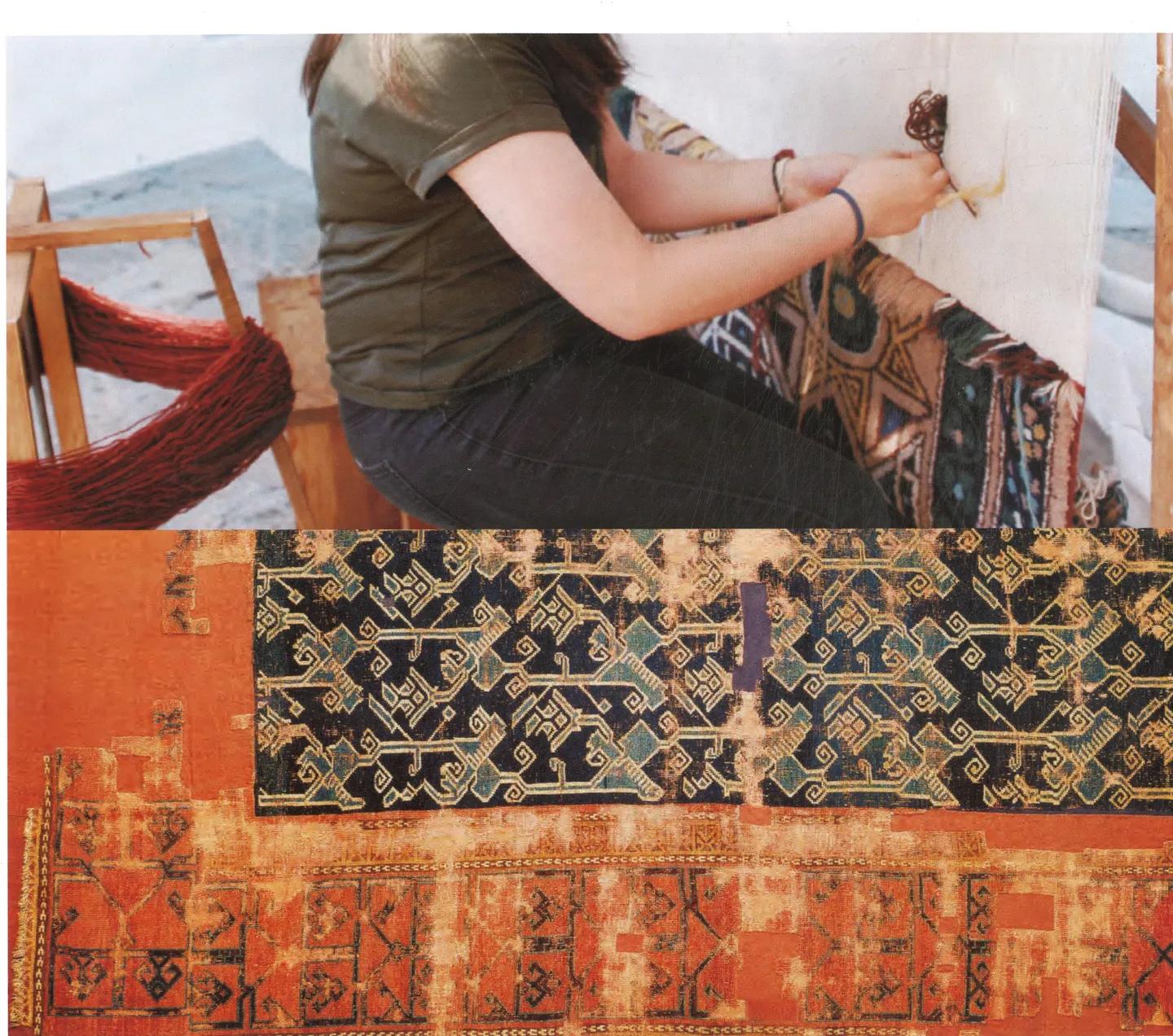
Textiles shape a mosque's appearance and use alongside its architecture. The historical carpets associated with Eşrefoğlu have moved between use, study and preservation, with histories distinct from the building that held them.
Mehmet Önder’s study of Seljuk carpets provides a specialist reference. It is a better starting point than treating every carpet in a modern interior photograph as medieval. A mosque can preserve an old framework while its everyday textiles change repeatedly. The object and the photograph therefore need separate dates, and a general weaving illustration cannot identify a particular historical carpet.
Details and connections
In a reproduction, distinguish the central field from borders. Follow repeated shapes and how a pattern approaches an edge. These observations make the design legible before questions of attribution or symbolism arise. Resemblance to carved wood can be a useful comparison, but cannot prove the same workshop made both objects.
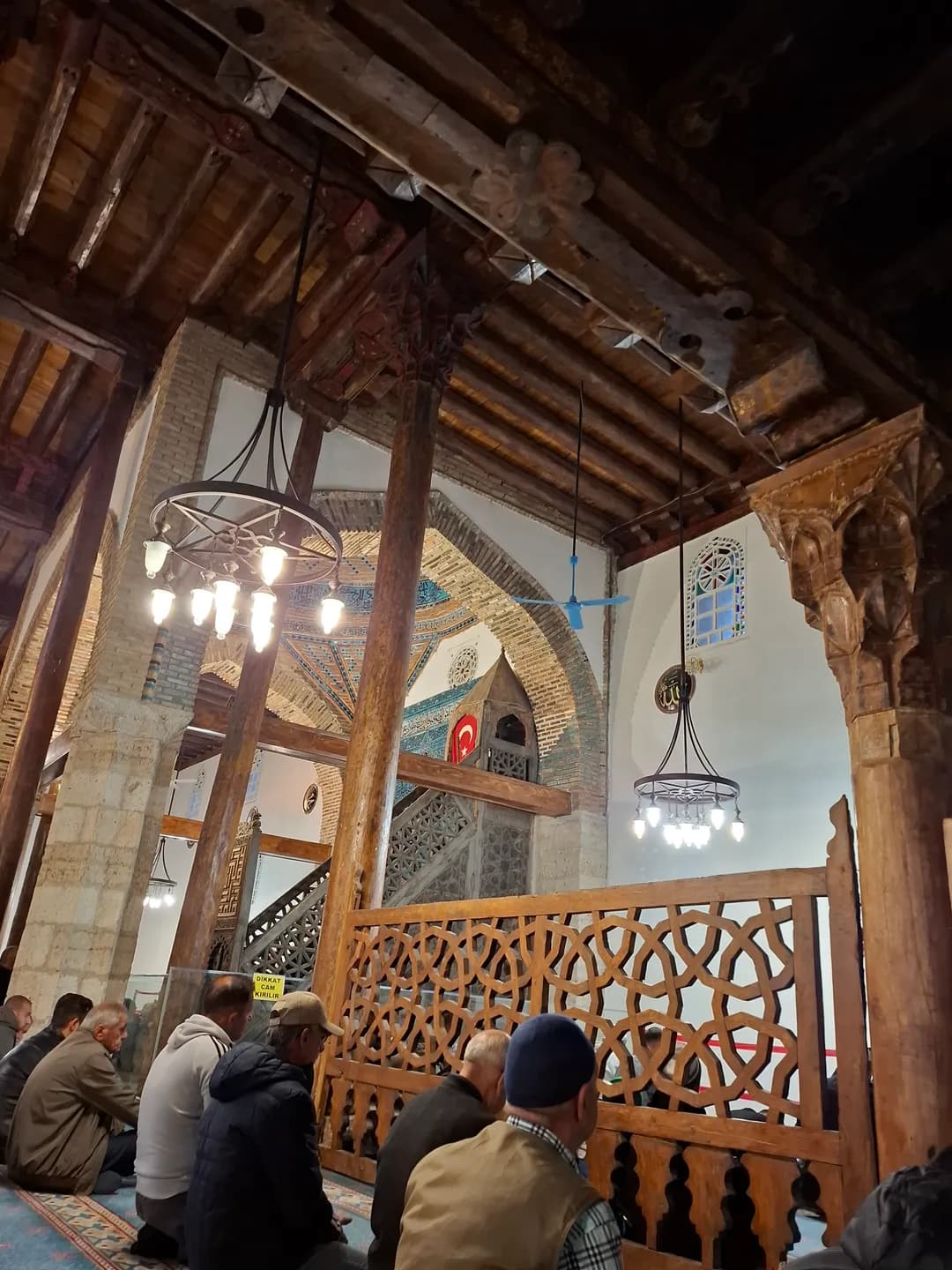
At Eşrefoğlu, columns organise the hall, tilework decorates the prayer wall and textiles cover the floor. The weaving image here provides context and does not identify a Seljuk carpet. Use the specialist reference for historical examples and check museum arrangements before travelling to see one.
Reading the wider setting
Compare a textile's border with its central field. Follow one repeated motif to the edge, using a whole view alongside a detail before assigning meanings to individual shapes.
A fragment asks the viewer to recognise both presence and absence. Surviving pattern can be studied closely, but a missing section cannot simply be completed with the most attractive repetition. Distinguish the preserved object from a diagram or modern example used to explain how a larger design might have worked.
Continue your visit
Compare woven repetition with the mosque's columns and the geometric work of the minbar. Similar visual questions arise at different scales: how small units form a whole, how an edge is resolved and how material affects the result. The comparison does not require the objects to share a maker.
Distinguish the building from its movable furnishings in photographs. Palace tiles follows decorated objects through architecture, research and display, offering another comparison with the carpets' changing settings.