A closer look
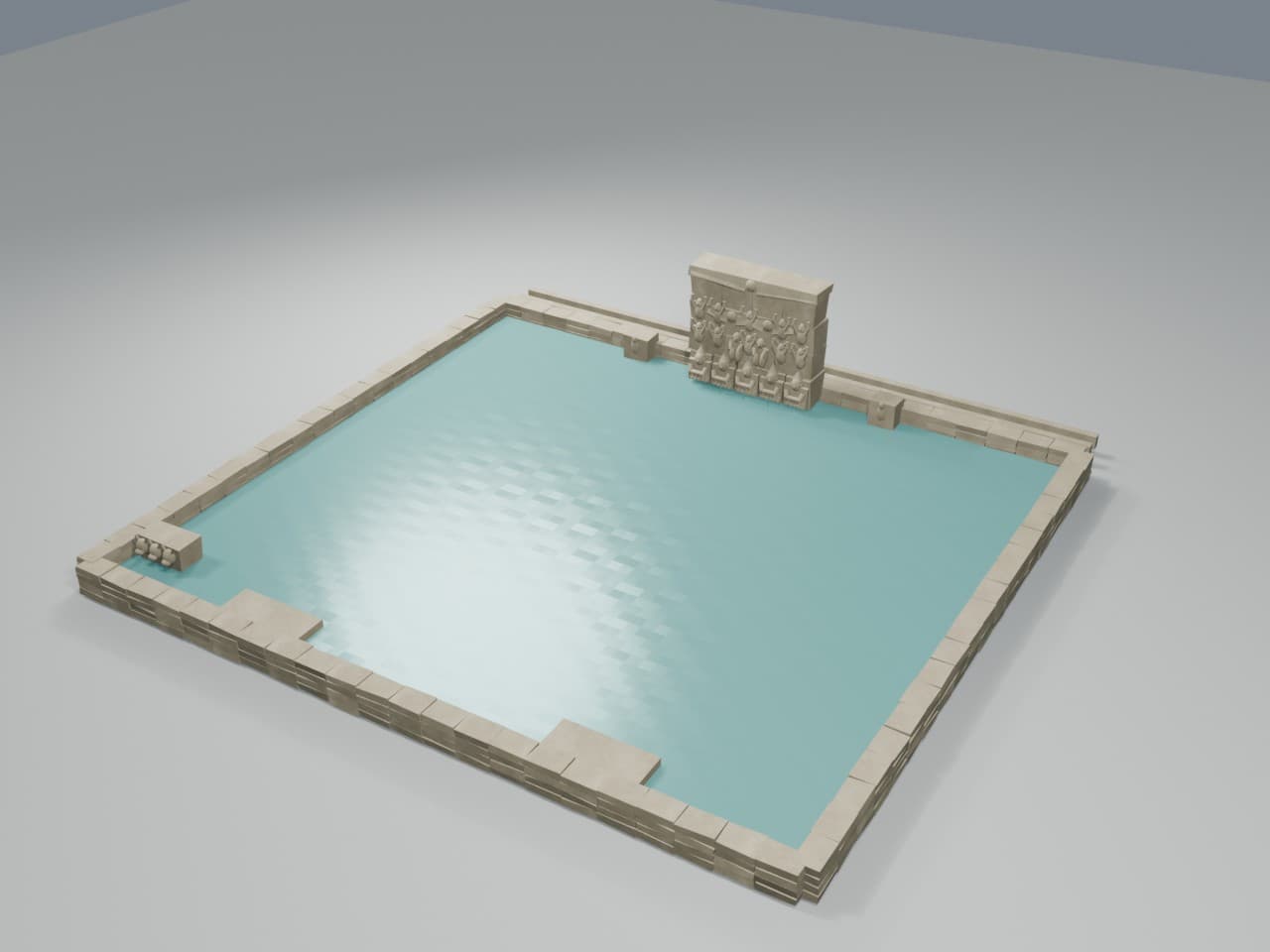
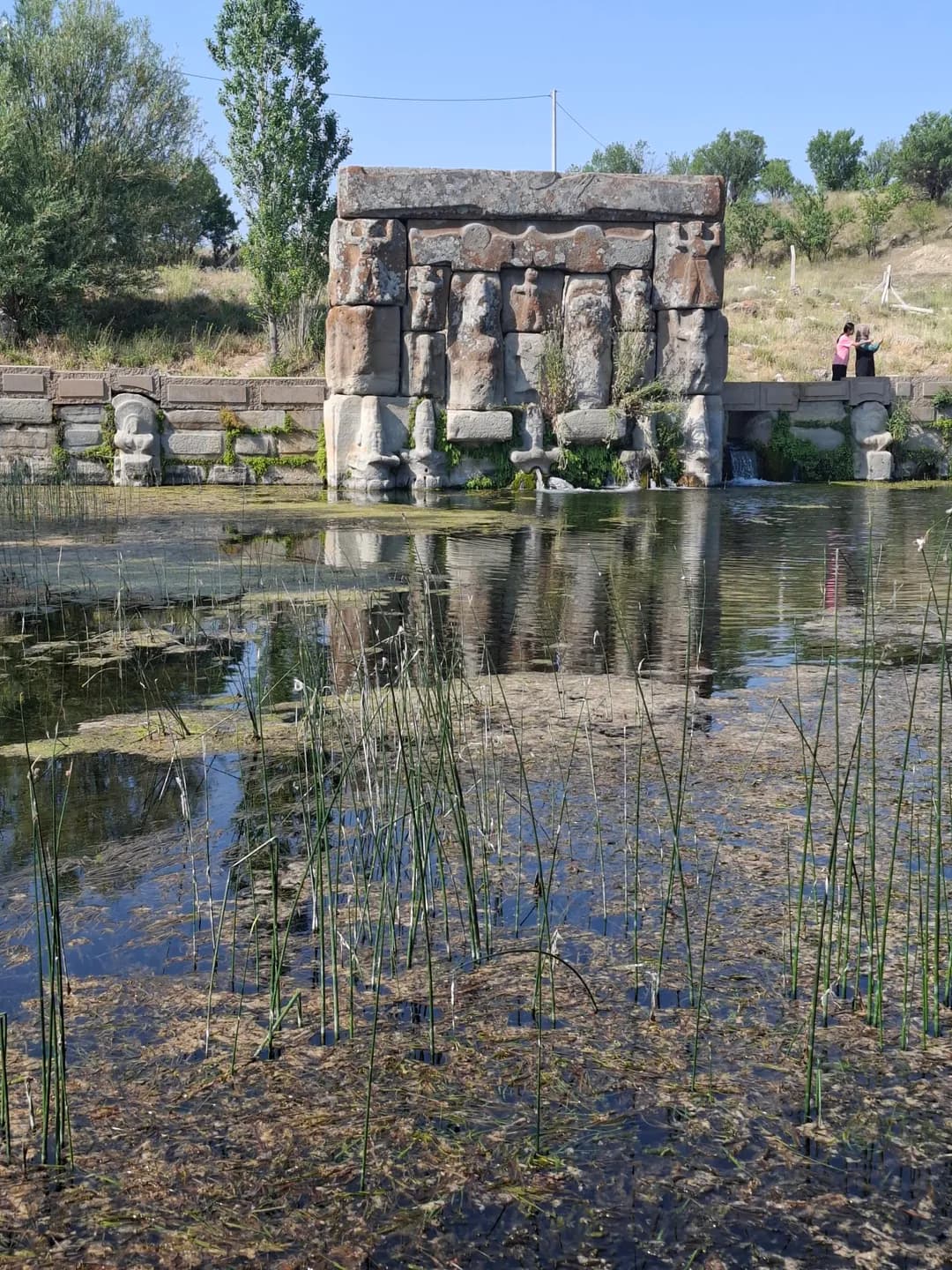
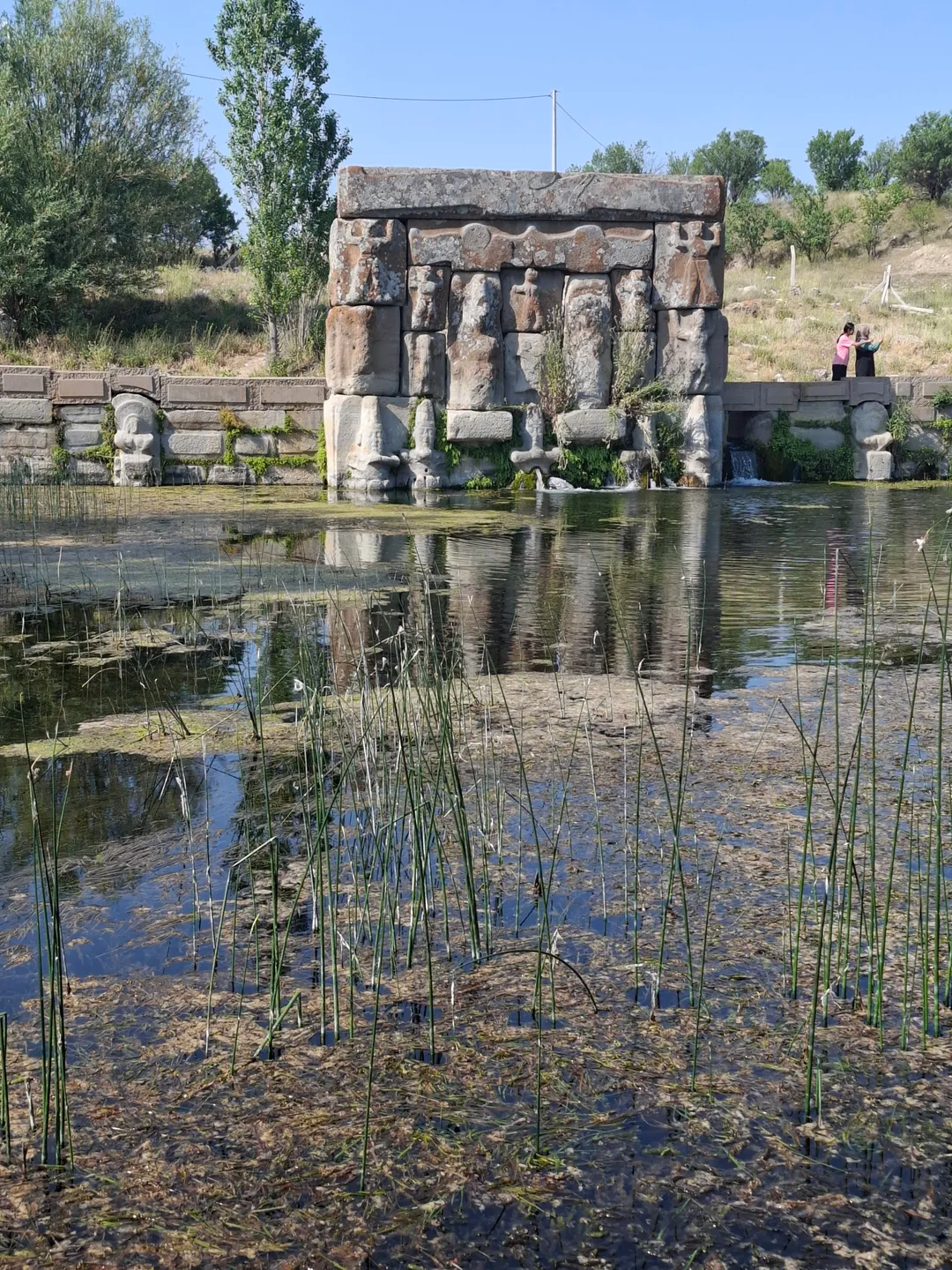
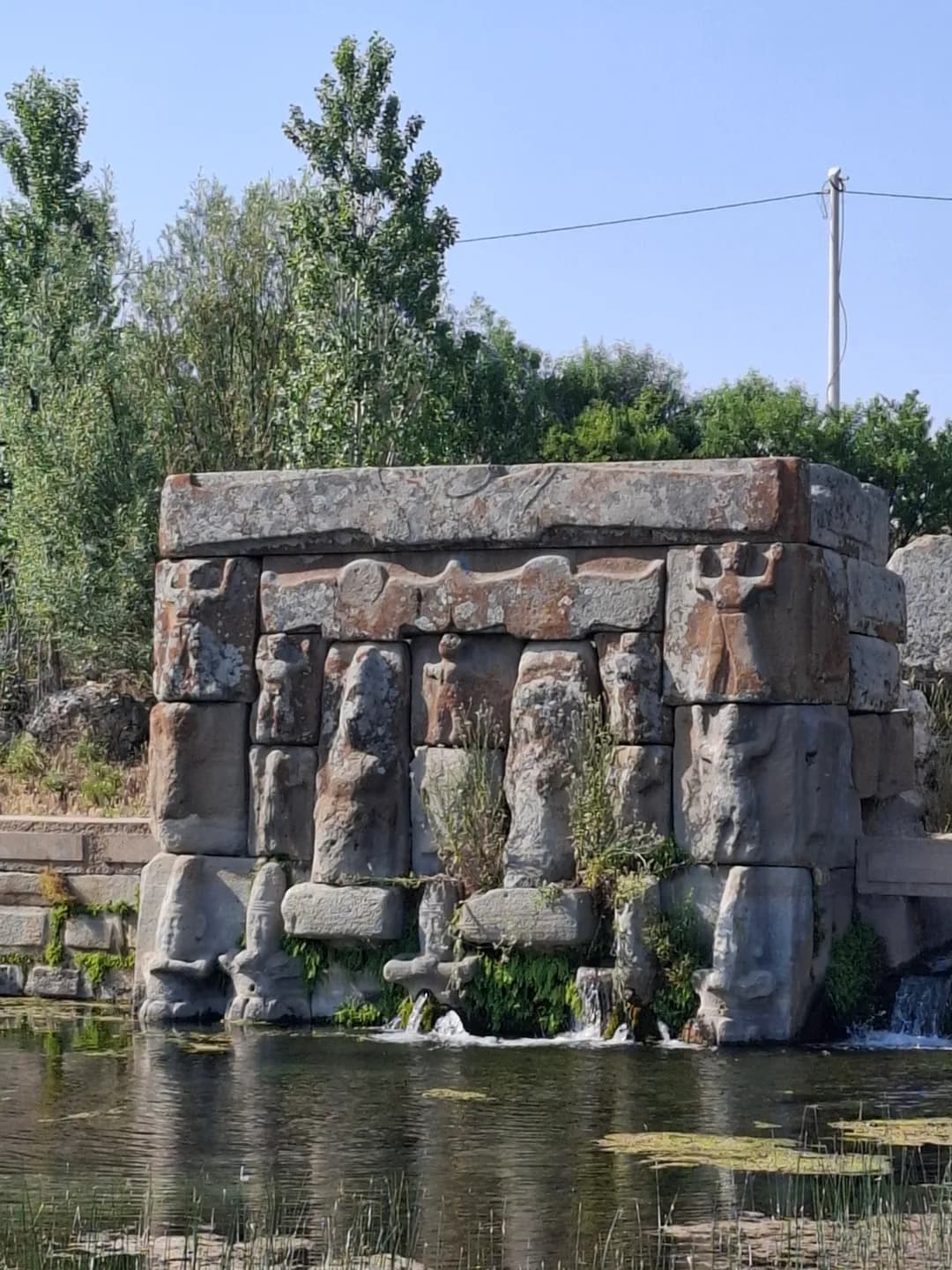
At Eflatunpınar, the spring and carved facade need to be read together. Water gives the setting its physical presence while repeated stone blocks organise the monumental image. Begin with a broad view of pool, masonry and reliefs before trying to name individual figures. The relationship between these elements is more revealing than a detached close-up of one carving.
The heritage sources identify the place with Hittite sacred architecture. That context explains why a spring could receive elaborate treatment, but does not give a certain meaning to every worn form. Some identifications depend on comparison and specialist readings. Observation and interpretation should remain distinct, particularly where weathering makes details difficult to recognise.
Details and connections
Look at how seams between stones interact with the carved composition. A monument assembled from blocks involves alignment and construction as well as sculpture. Water introduces another question: how does the built arrangement respond to a natural source? Reading the pool as an ornamental addition to a freestanding image misses that connection.
The photographs record particular light and water conditions. Reflections and vegetation can reveal one part while concealing another. Compare a wide view with details, but do not treat either as a complete survey. Remain in permitted viewing areas, avoid entering the pool and consult the cited accounts for historical interpretation. Fasıllar extends the regional comparison while remaining a separate place with its own evidence.
Reading the wider setting
A useful first photograph includes the pool and the arrangement above it. A second can concentrate on a recognisable group of forms. Comparing the two afterwards helps you remember where a detail belongs, instead of turning the facade into a collection of disconnected symbols without scale or setting.
Water and stone also create different visual rhythms. The masonry holds its alignment while the surface in front of it changes with light and movement. Look at where a reflection is interrupted and where a carved edge remains clear. The encounter involves both a constructed image and conditions that change during the visit.
Continue your visit
Compare the monument's assembled blocks with the single large stone at Fasıllar. One invites attention to joins and alignment; the other to the relationship between a continuous mass and its carved face. This material comparison can be made before considering theories about the intended relationship between the sites.
Water and city opens a much later chapter at Beyşehir's regulator. Reading the two accounts together lets you ask how a structure responds to water in different contexts. It is a comparison of questions, not a claim that a Hittite monument and modern irrigation works shared one continuous function.