
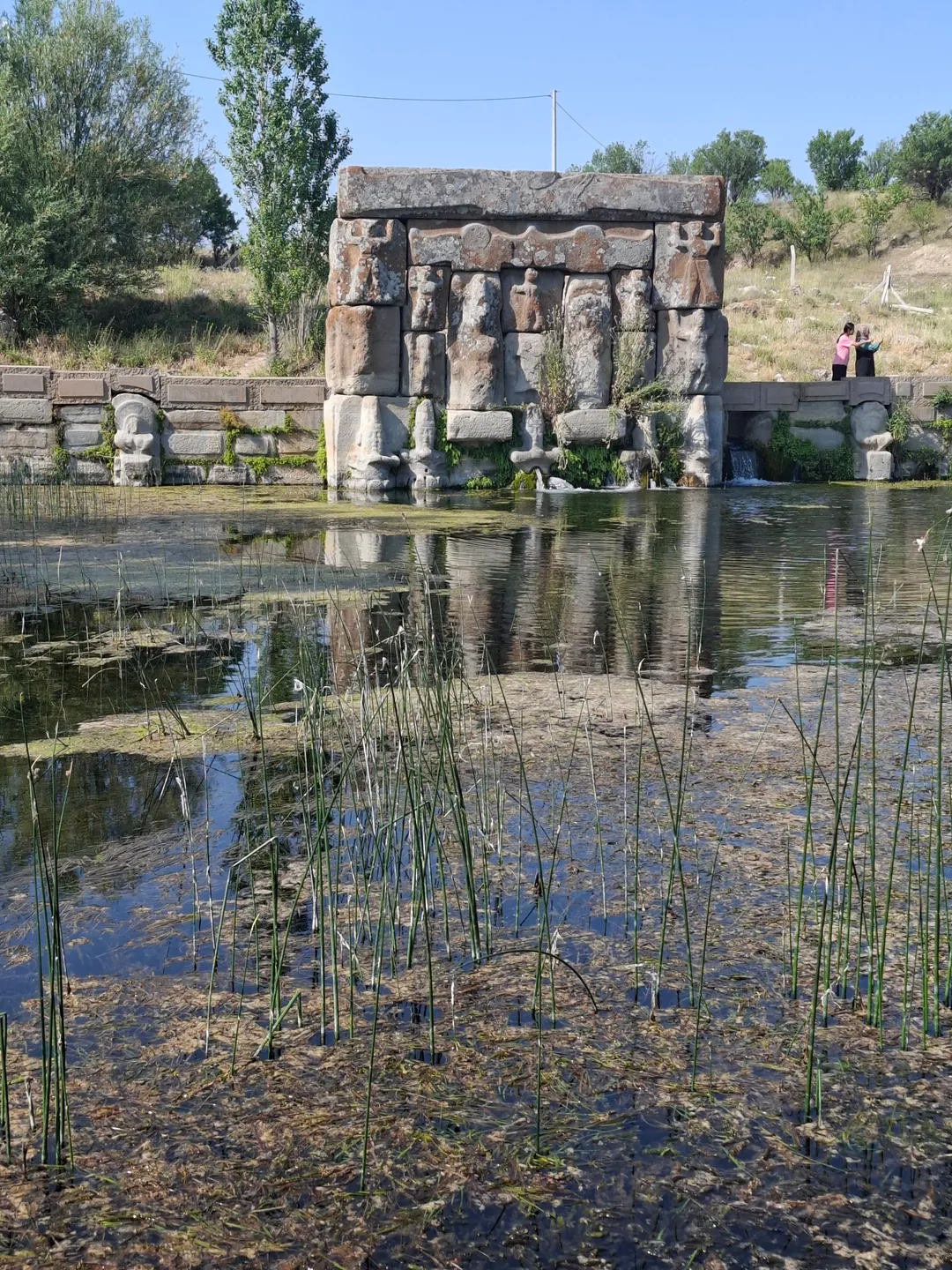
A closer look
At Eflatunpınar, a carved facade of repeated stone blocks stands with a spring pool. View the water, masonry and reliefs together before examining individual figures.
The heritage sources identify the place with Hittite sacred architecture. That context explains why a spring could receive elaborate treatment, but does not give a certain meaning to every worn form. Some identifications depend on comparison and specialist readings. Observation and interpretation should remain distinct, particularly where weathering makes details difficult to recognise.
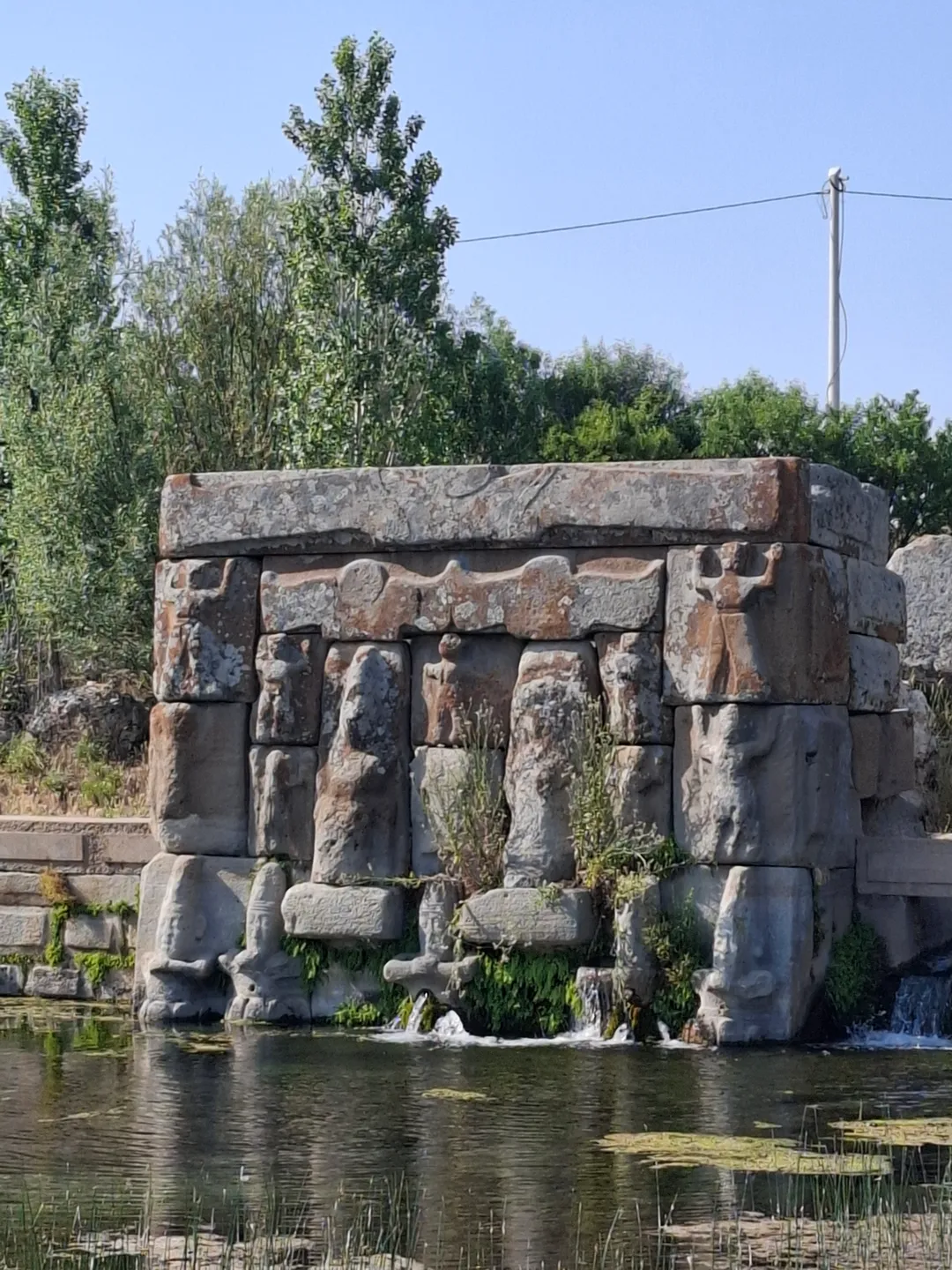
Details and connections
Look at how seams between stones interact with the carved composition. A monument assembled from blocks involves alignment and construction as well as sculpture. Water introduces another question: how does the built arrangement respond to a natural source? Reading the pool as an ornamental addition to a freestanding image misses that connection.
Reflections, vegetation and changing light affect what the photographs show; they do not form a complete survey. Stay in permitted viewing areas and keep out of the pool. Consult the cited accounts for historical interpretation, and compare Fasıllar using its own evidence.
Reading the wider setting
Photograph the pool and facade together, then a group of visible forms. The wider image records where the detail belongs and what a close view leaves out.
Water and stone also create different visual rhythms. The masonry holds its alignment while the surface in front of it changes with light and movement. Look at where a reflection is interrupted and where a carved edge remains clear. The encounter involves both a constructed image and conditions that change during the visit.
Continue your visit
Compare the monument's assembled blocks with the single large stone at Fasıllar. One invites attention to joins and alignment; the other to the relationship between a continuous mass and its carved face. This material comparison can be made before considering theories about the intended relationship between the sites.
Water and city covers Beyşehir's later regulator. Compare how the structures respond to water, while keeping the Hittite monument's purpose distinct from modern irrigation.