
Reference overview
Tarihi Mekanlar Kişisel Ansiklopedi - Beyşehir Eserleri
Erol Şaşmaz · Kişisel Ansiklopedi (turkiyenintarihieserleri.com)
Read the place guides and stories that draw on this source.
Read with your device’s voice.
Taşlıpınar Ares Relief
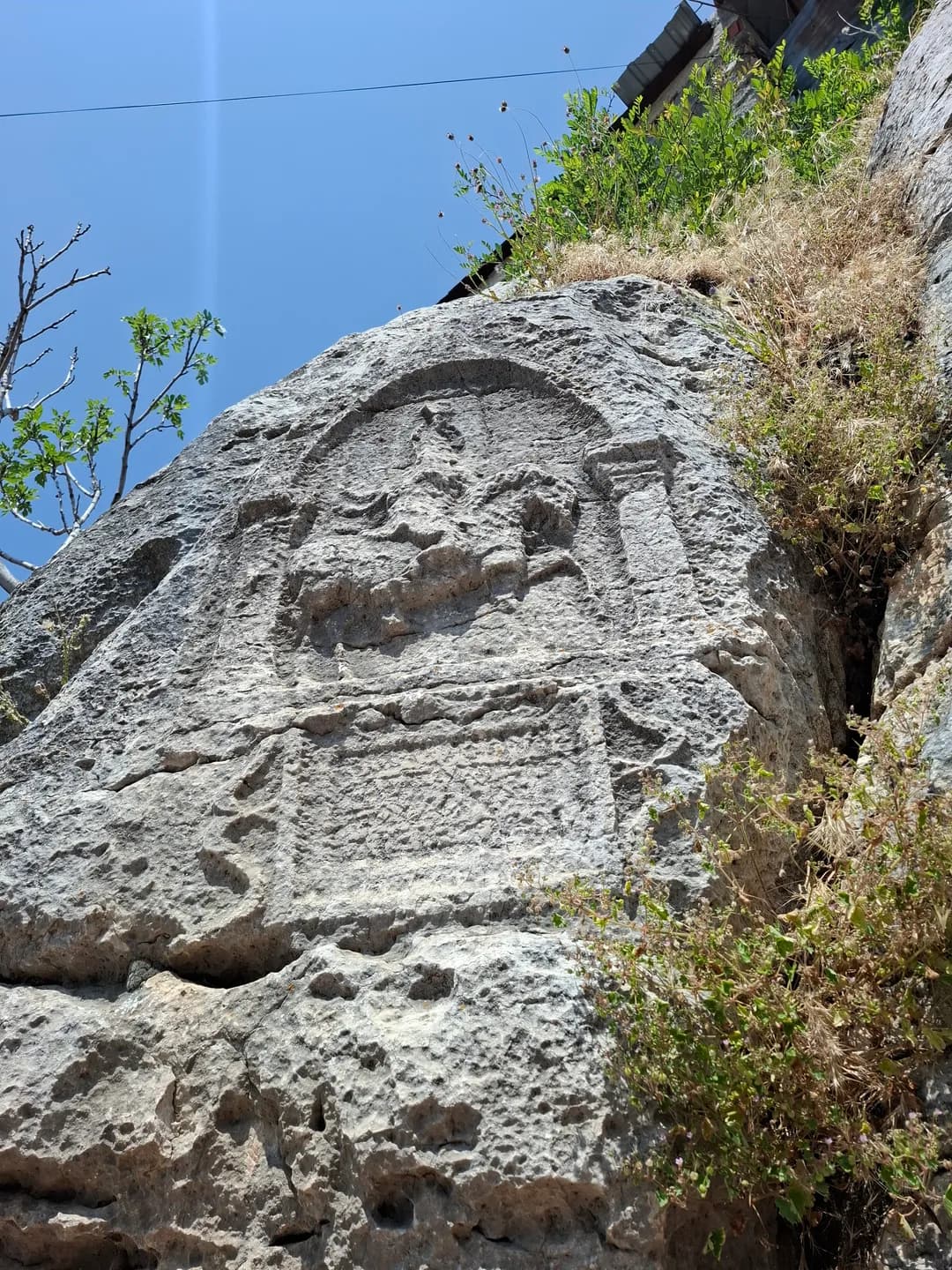
Roman-period rock niche and Greek dedication inscription integrated into a village wall.
At Taşlıpınar, a carved niche puts the relationship between an image and its rock surface at the centre of the visit. The owner’s photographs show the wider setting and closer details, allowing the same relief to be approached at different scales. The identification with Ares comes from the cited heritage account; a military image alone does not establish the identity of every person who lived nearby.
At Taşlıpınar, the carved niche frames a figure within the larger rock surface. A broad view shows the setting, while a closer view reveals the figure’s outline and the depth of the carving. Near Fasıllar, the Lukyanos inscription offers a different encounter: remembrance expressed through words cut into stone. Image and writing invite different kinds of attention.
At a relief, follow the figure’s outline and its relation to the surrounding surface. At an inscription, evidence includes the actual letters, their condition and the circumstances of recording. Names, dedications and references to contests need a published transcription and interpretation. A fluent modern summary can hide difficult readings that a holiday photograph cannot resolve.
The secondary heritage account helps locate these subjects, but cannot establish an entire military settlement from a martial image or supply a complete biography from a commemorative text. Compare two ways of remembering: a figure carved into rock and words cut into a surface. Record which place each photograph shows and respect existing access arrangements. Keeping image, inscription and interpretation separate makes the landscape’s historical layers more legible.
Start by deciding whether you are reading an image or a text. A figure can be approached through pose, outline and its relation to a niche. An inscription requires attention to recorded letters and language. The two may share stone as a material, but they do not yield information in the same way.
A wider photograph is useful even when your main interest is a small carved detail. It records the rock surface and the place of the feature within it. Add the location to the caption immediately, so an Ares image is not later presented as part of the Lukyanos inscription or the Hittite monolith.
Compare the act of looking with the specialist account. Which details can you distinguish for yourself, and which depend on a transcription or scholarly identification? Keeping that distinction visible does not diminish the encounter. It shows how observation and research work together to make a difficult surface readable.
Continue with Stone cenotaphs for another form of commemoration and Reading stone for the Hittite comparison. These links bring different periods into conversation without erasing the distance between them. A name, an image and a monument each preserve something different about the people who commissioned or encountered them.
Hittite Water and Mountain Cult
Gods holding up the sky and spring waters in the Eflatunpınar andesite reliefs.
At Eflatunpınar, the spring and carved facade need to be read together. Water gives the setting its physical presence while repeated stone blocks organise the monumental image. Begin with a broad view of pool, masonry and reliefs before trying to name individual figures. The relationship between these elements is more revealing than a detached close-up of one carving.
The heritage sources identify the place with Hittite sacred architecture. That context explains why a spring could receive elaborate treatment, but does not give a certain meaning to every worn form. Some identifications depend on comparison and specialist readings. Observation and interpretation should remain distinct, particularly where weathering makes details difficult to recognise.
Look at how seams between stones interact with the carved composition. A monument assembled from blocks involves alignment and construction as well as sculpture. Water introduces another question: how does the built arrangement respond to a natural source? Reading the pool as an ornamental addition to a freestanding image misses that connection.
The photographs record particular light and water conditions. Reflections and vegetation can reveal one part while concealing another. Compare a wide view with details, but do not treat either as a complete survey. Remain in permitted viewing areas, avoid entering the pool and consult the cited accounts for historical interpretation. Fasıllar extends the regional comparison while remaining a separate place with its own evidence.
A useful first photograph includes the pool and the arrangement above it. A second can concentrate on a recognisable group of forms. Comparing the two afterwards helps you remember where a detail belongs, instead of turning the facade into a collection of disconnected symbols without scale or setting.
Water and stone also create different visual rhythms. The masonry holds its alignment while the surface in front of it changes with light and movement. Look at where a reflection is interrupted and where a carved edge remains clear. The encounter involves both a constructed image and conditions that change during the visit.
Compare the monument's assembled blocks with the single large stone at Fasıllar. One invites attention to joins and alignment; the other to the relationship between a continuous mass and its carved face. This material comparison can be made before considering theories about the intended relationship between the sites.
Water and city opens a much later chapter at Beyşehir's regulator. Reading the two accounts together lets you ask how a structure responds to water in different contexts. It is a comparison of questions, not a claim that a Hittite monument and modern irrigation works shared one continuous function.
Ares and Lukyanos the Cavalier
Shared classical heritage between the Fasıllar horse stele and Taşlıpınar rock relief.
Beyşehir’s regional heritage includes more than one ancient visual language. Hittite monuments and classical inscriptions can occupy the same broad landscape without belonging to the same period. The relief associated with Ares at Taşlıpınar and the Lukyanos inscription near Fasıllar show why the district’s history cannot be condensed into a single civilisation.
At Taşlıpınar, the carved niche frames a figure within the larger rock surface. A broad view shows the setting, while a closer view reveals the figure’s outline and the depth of the carving. Near Fasıllar, the Lukyanos inscription offers a different encounter: remembrance expressed through words cut into stone. Image and writing invite different kinds of attention.
At a relief, follow the figure’s outline and its relation to the surrounding surface. At an inscription, evidence includes the actual letters, their condition and the circumstances of recording. Names, dedications and references to contests need a published transcription and interpretation. A fluent modern summary can hide difficult readings that a holiday photograph cannot resolve.
The secondary heritage account helps locate these subjects, but cannot establish an entire military settlement from a martial image or supply a complete biography from a commemorative text. Compare two ways of remembering: a figure carved into rock and words cut into a surface. Record which place each photograph shows and respect existing access arrangements. Keeping image, inscription and interpretation separate makes the landscape’s historical layers more legible.
Start by deciding whether you are reading an image or a text. A figure can be approached through pose, outline and its relation to a niche. An inscription requires attention to recorded letters and language. The two may share stone as a material, but they do not yield information in the same way.
A wider photograph is useful even when your main interest is a small carved detail. It records the rock surface and the place of the feature within it. Add the location to the caption immediately, so an Ares image is not later presented as part of the Lukyanos inscription or the Hittite monolith.
Compare the act of looking with the specialist account. Which details can you distinguish for yourself, and which depend on a transcription or scholarly identification? Keeping that distinction visible does not diminish the encounter. It shows how observation and research work together to make a difficult surface readable.
Continue with Stone cenotaphs for another form of commemoration and Reading stone for the Hittite comparison. These links bring different periods into conversation without erasing the distance between them. A name, an image and a monument each preserve something different about the people who commissioned or encountered them.
Taşlıpınar Ares Relief & Classical Votives
Helmeted war-god relief and Greek dedicatory inscription carved directly into bedrock adjoining a village house.
At Taşlıpınar, a carved niche puts the relationship between an image and its rock surface at the centre of the visit. The owner’s photographs show the wider setting and closer details, allowing the same relief to be approached at different scales. The identification with Ares comes from the cited heritage account; a military image alone does not establish the identity of every person who lived nearby.
At Taşlıpınar, the carved niche frames a figure within the larger rock surface. A broad view shows the setting, while a closer view reveals the figure’s outline and the depth of the carving. Near Fasıllar, the Lukyanos inscription offers a different encounter: remembrance expressed through words cut into stone. Image and writing invite different kinds of attention.
At a relief, follow the figure’s outline and its relation to the surrounding surface. At an inscription, evidence includes the actual letters, their condition and the circumstances of recording. Names, dedications and references to contests need a published transcription and interpretation. A fluent modern summary can hide difficult readings that a holiday photograph cannot resolve.
The secondary heritage account helps locate these subjects, but cannot establish an entire military settlement from a martial image or supply a complete biography from a commemorative text. Compare two ways of remembering: a figure carved into rock and words cut into a surface. Record which place each photograph shows and respect existing access arrangements. Keeping image, inscription and interpretation separate makes the landscape’s historical layers more legible.
Start by deciding whether you are reading an image or a text. A figure can be approached through pose, outline and its relation to a niche. An inscription requires attention to recorded letters and language. The two may share stone as a material, but they do not yield information in the same way.
A wider photograph is useful even when your main interest is a small carved detail. It records the rock surface and the place of the feature within it. Add the location to the caption immediately, so an Ares image is not later presented as part of the Lukyanos inscription or the Hittite monolith.
Compare the act of looking with the specialist account. Which details can you distinguish for yourself, and which depend on a transcription or scholarly identification? Keeping that distinction visible does not diminish the encounter. It shows how observation and research work together to make a difficult surface readable.
Continue with Stone cenotaphs for another form of commemoration and Reading stone for the Hittite comparison. These links bring different periods into conversation without erasing the distance between them. A name, an image and a monument each preserve something different about the people who commissioned or encountered them.
Related places