
A closer look
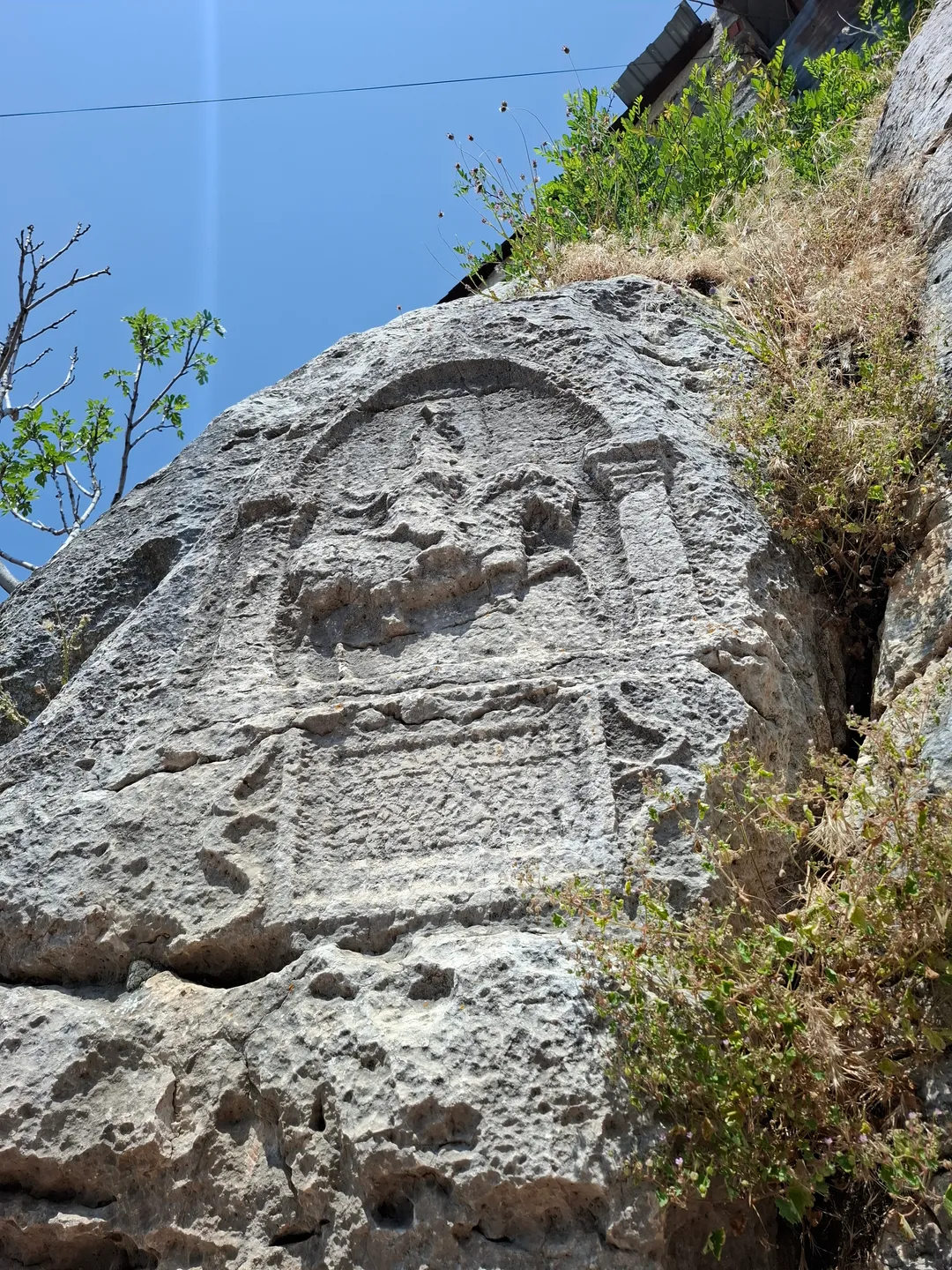
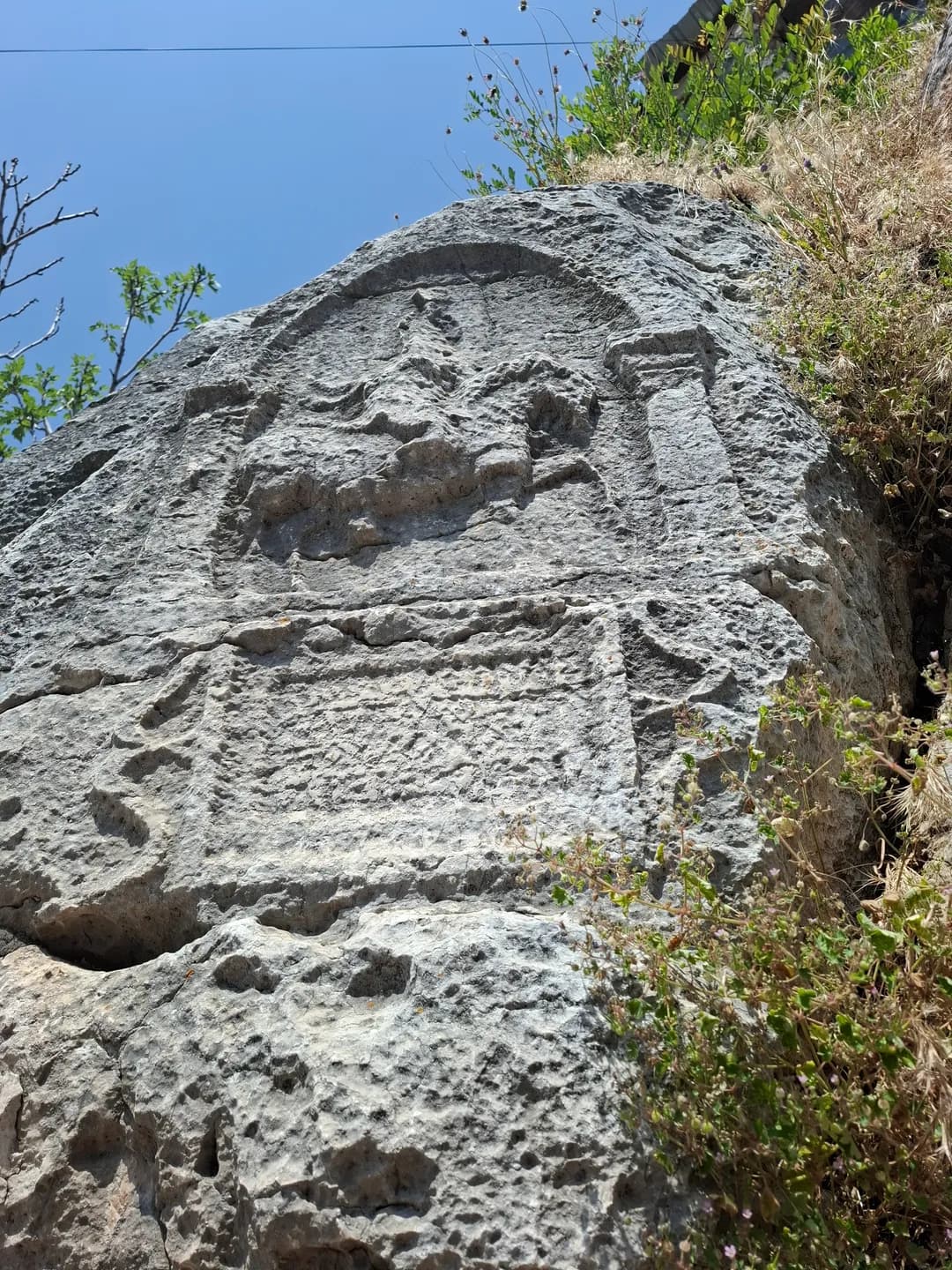
At Taşlıpınar, a carved niche puts the relationship between an image and its rock surface at the centre of the visit. The owner’s photographs show the wider setting and closer details, allowing the same relief to be approached at different scales. The identification with Ares comes from the cited heritage account; a military image alone does not establish the identity of every person who lived nearby.
At Taşlıpınar, the carved niche frames a figure within the larger rock surface. A broad view shows the setting, while a closer view reveals the figure’s outline and the depth of the carving. Near Fasıllar, the Lukyanos inscription offers a different encounter: remembrance expressed through words cut into stone. Image and writing invite different kinds of attention.
Details and connections
At a relief, follow the figure’s outline and its relation to the surrounding surface. At an inscription, evidence includes the actual letters, their condition and the circumstances of recording. Names, dedications and references to contests need a published transcription and interpretation. A fluent modern summary can hide difficult readings that a holiday photograph cannot resolve.
The secondary heritage account helps locate these subjects, but cannot establish an entire military settlement from a martial image or supply a complete biography from a commemorative text. Compare two ways of remembering: a figure carved into rock and words cut into a surface. Record which place each photograph shows and respect existing access arrangements. Keeping image, inscription and interpretation separate makes the landscape’s historical layers more legible.
Reading the wider setting
Start by deciding whether you are reading an image or a text. A figure can be approached through pose, outline and its relation to a niche. An inscription requires attention to recorded letters and language. The two may share stone as a material, but they do not yield information in the same way.
A wider photograph is useful even when your main interest is a small carved detail. It records the rock surface and the place of the feature within it. Add the location to the caption immediately, so an Ares image is not later presented as part of the Lukyanos inscription or the Hittite monolith.
Continue your visit
Compare the act of looking with the specialist account. Which details can you distinguish for yourself, and which depend on a transcription or scholarly identification? Keeping that distinction visible does not diminish the encounter. It shows how observation and research work together to make a difficult surface readable.
Continue with Stone cenotaphs for another form of commemoration and Reading stone for the Hittite comparison. These links bring different periods into conversation without erasing the distance between them. A name, an image and a monument each preserve something different about the people who commissioned or encountered them.