
A closer look
Beyşehir's food culture can be approached through the work of preparing for another season. Tarhana is a particularly useful starting point because it connects ingredients, shared labour, drying and the way food is offered at the table. The finished product carries a sequence of activities that a menu name alone cannot explain.
The municipal research volume describes local tarhana made with strained yoghurt, grain and fat, shaped into rounds and dried on prepared supports. It also records its use both as soup and as a crisp food eaten with nuts. Those two forms of serving help explain why the same food can belong to a meal and a long evening of conversation.
Details and connections
The account places preparation within imece, shared work among households and neighbours. Consider how many decisions sit behind a drying tray: combining the mixture, forming pieces, finding suitable space and watching the conditions. Food heritage is present in this coordination as much as in the name of a dish.
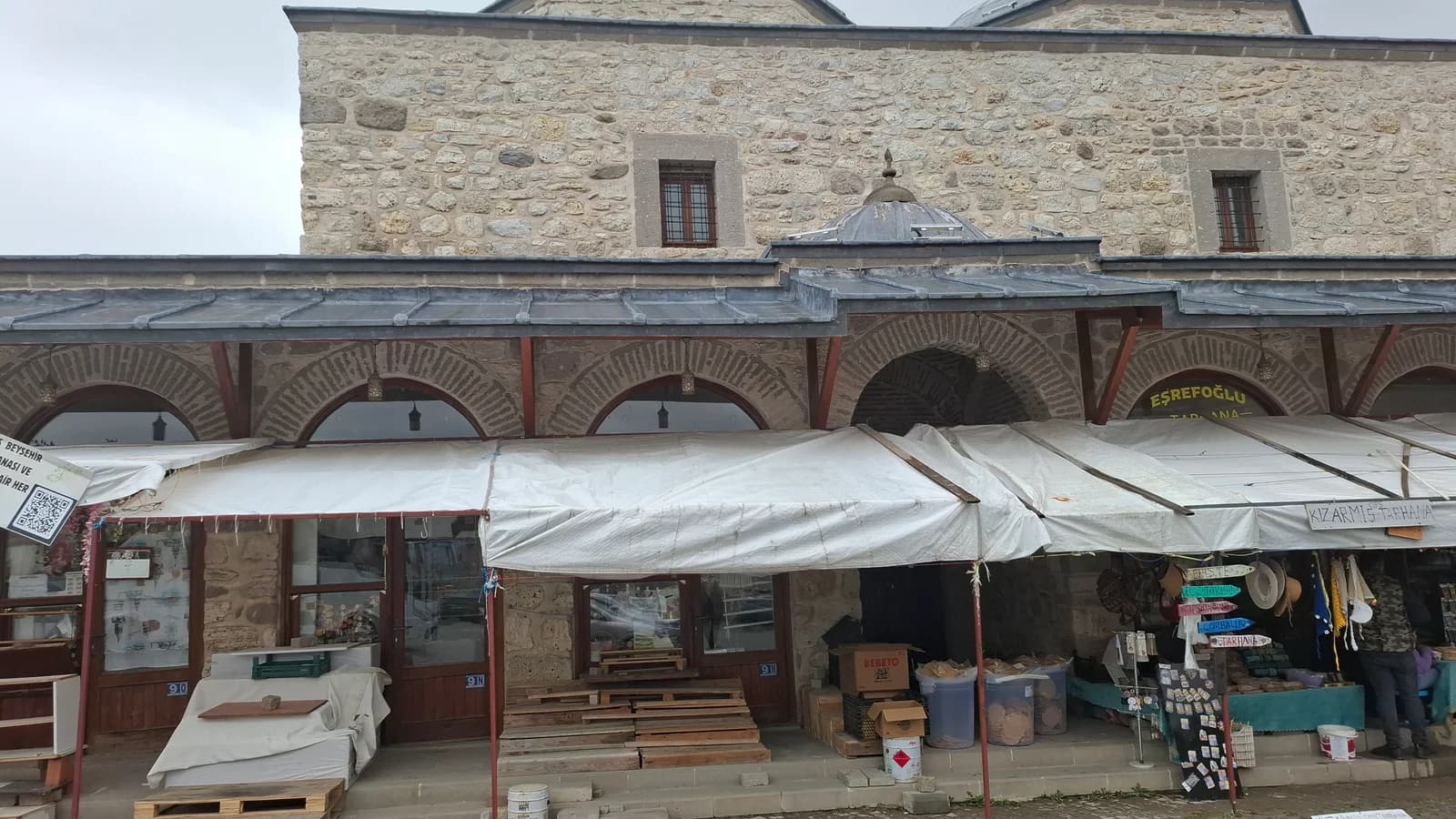
Ask a producer how they serve their own tarhana. Is the product being offered for cooking, ready to eat or prepared in another way? Follow the maker's storage and preparation instructions for the particular purchase. A conversation about one household's practice is more useful than assuming there is only one recipe throughout the district.
Reading the wider setting
The official geographical-indication portal lists the Beyşehir Tarhanası application, filed by the district agriculture directorate on 7 March 2025, as an application when checked on 22 September 2026. A product record and a cultural account have different purposes: one records a formal process, the other describes preparation and use.
When buying food, read the actual ingredients and ask about anything that matters to your dietary needs. The local accounts include grain and dairy ingredients; a regional name alone is not an ingredient list for every product. Photograph packaging or write down the maker's advice so the food can be enjoyed as intended after the journey.
Continue your visit
Market memory connects the table with spaces of exchange, while Artisans of Huğlu and Üzümlü opens a different conversation about learned skill and organised work. Compare them without treating all production as the same activity. Each reveals people making decisions about material, time and what will be shared or sold.
A good food memory can be small and precise: what you tasted, who explained it and how it was served. Ask before photographing preparation in a home or workplace. Keep that individual voice alongside the published references, and let the meal add a human-scale chapter to the architectural and lakeside visit.