
Reference overview
Seyahatnameler ve Tarihî Coğrafya Eserlerinde Beyşehir
Hüseyin Muşmal · Journal of History School (Tarih Okulu Dergisi)
Read the place guides and stories that draw on this source.
Read with your device’s voice.
Beyşehir in Travelers’ Accounts
Eastern and Western voyagers describing Eşrefoğlu Mosque, Kubadabad tiles and island communities.
Travel writing offers an earlier Beyşehir through the choices of people passing through. One visitor notices a building, another a crossing or the circumstances of a stay. These observations can be valuable, but they are selections rather than a complete inventory. Reading them beside the present-day town is a rewarding exercise precisely because the views differ.
Hüseyin Muşmal’s study compares travel accounts and works of historical geography. Descriptions from different dates and purposes reveal changes in emphasis as well as possible changes in places. A memorable sentence cannot carry a neighbourhood’s entire history. Nor should a later summary be mistaken for the original traveller’s exact words.
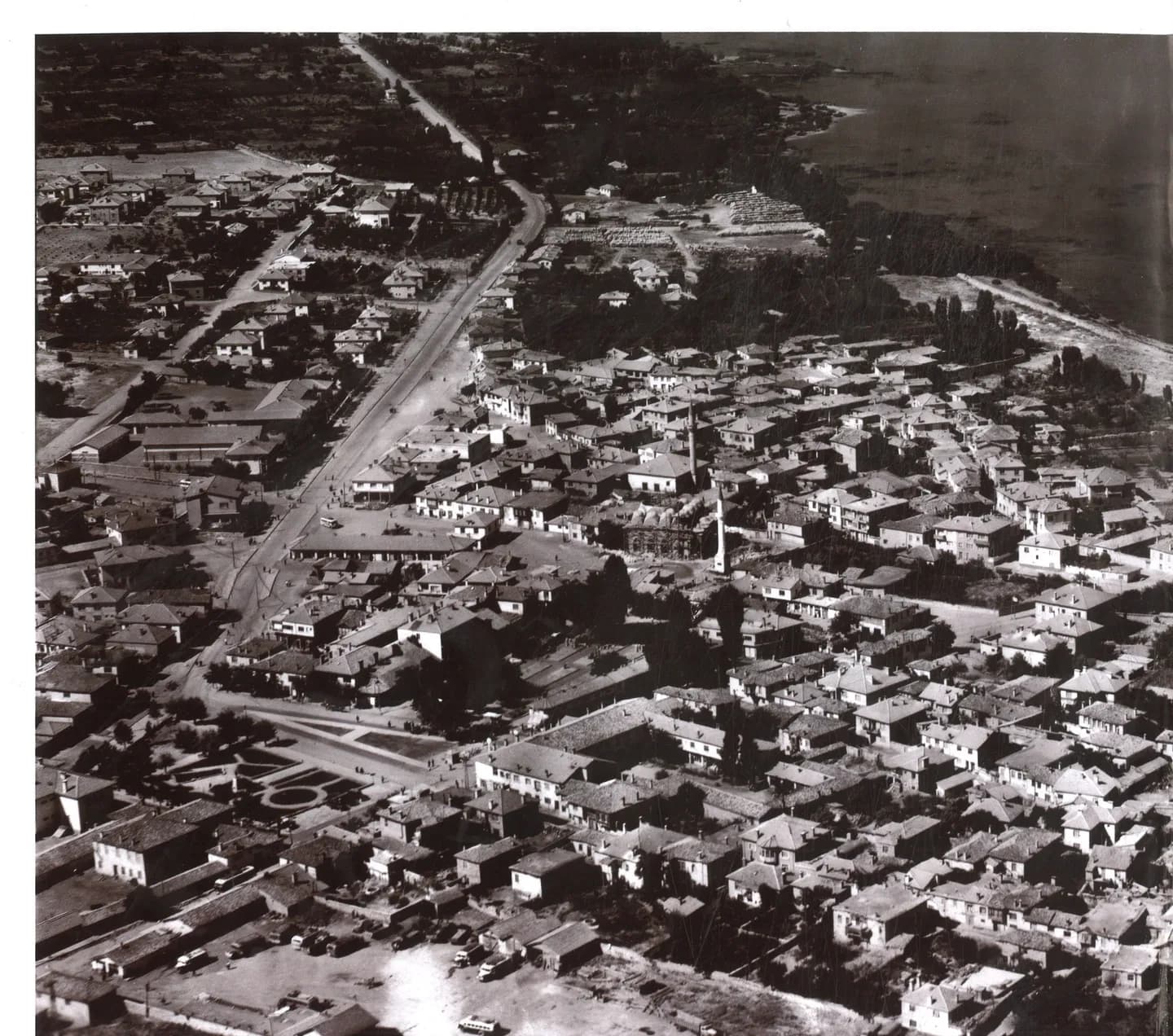
The writer’s position matters. A short-term visitor and a resident do not see the same town, and an account may have been edited or translated long after the journey. Travel date, publication date and photograph date are different evidence. The historical aerial illustration here provides urban context; it does not prove a traveller’s precise route or establish every old street name’s modern equivalent.
Choose one visible feature and compare its treatment in the sources. Ask what a writer observed directly and what was reported second-hand. Avoid turning an uncertain identification into a plaque-like certainty. Moving between place and text while retaining differences between witnesses produces a richer reading walk than collecting quotations detached from their setting.
Read a travel account with a small set of questions in mind: who is speaking, when did the visit take place and what brought the writer to the town? A description prepared for other travellers may notice different things from a geographical survey or a personal recollection.
Choose a recognisable subject, such as the lake or a crossing, and compare how two accounts frame it. One may emphasise movement, another appearance or the circumstances of a stay. Difference is useful evidence of perspective, even when neither passage can settle a precise architectural question.
Then make your own short description from a public viewpoint. Record the date and distinguish what you saw from what you had already read. Revisiting that note afterwards is a practical way to understand how every account selects and arranges details, including your own.
Market memory and Water and city offer places for this exercise, while Wartime Beyşehir introduces a very different kind of temporary presence. Read the journeys in their own circumstances rather than treating every visitor as a tourist. The reason someone arrived shapes what their account can tell us.
Related places
·