
Reference overview
II. Dünya Savaşı Yıllarında Beyşehir’de Bir Enterne Kampı (Hitlerin Askerleri Beyşehir’de)
Hüseyin Muşmal, Hasret Gümüş · Tarihin Peşinde – Uluslararası Tarih ve Sosyal Araştırmalar Dergisi
Read the place guides and stories that draw on this source.
Read with your device’s voice.
The WWII Beyşehir Internment Camp
The story of German naval personnel interned in Beyşehir during 1944–1945.
Beyşehir’s twentieth-century history includes compulsory residence far removed from a normal lakeside visit. Hüseyin Muşmal and Hasret Gümüş examine German naval personnel held in the town during the closing phase of the Second World War. Their research draws on memoirs, diaries and accounts from people connected with the events.
Identify the subject precisely: approximately 320 German naval servicemen, not an undifferentiated group of civilians and soldiers. The wider September 1944–July 1946 chronology spans different locations and circumstances. The study distinguishes roughly eight months in Beyşehir from the later period in Isparta. The whole interval must not be described as time spent in Beyşehir.
Events in the Black Sea and Turkey’s changing wartime position provide context. Internment is not a voluntary holiday, even when memoirs describe ordinary activities or encounters with residents. Administrative status, restrictions and transfer are part of the history. A diary conveys its author’s perspective; a later interview may remember the period differently. Neither justifies claiming everybody had the same experience.
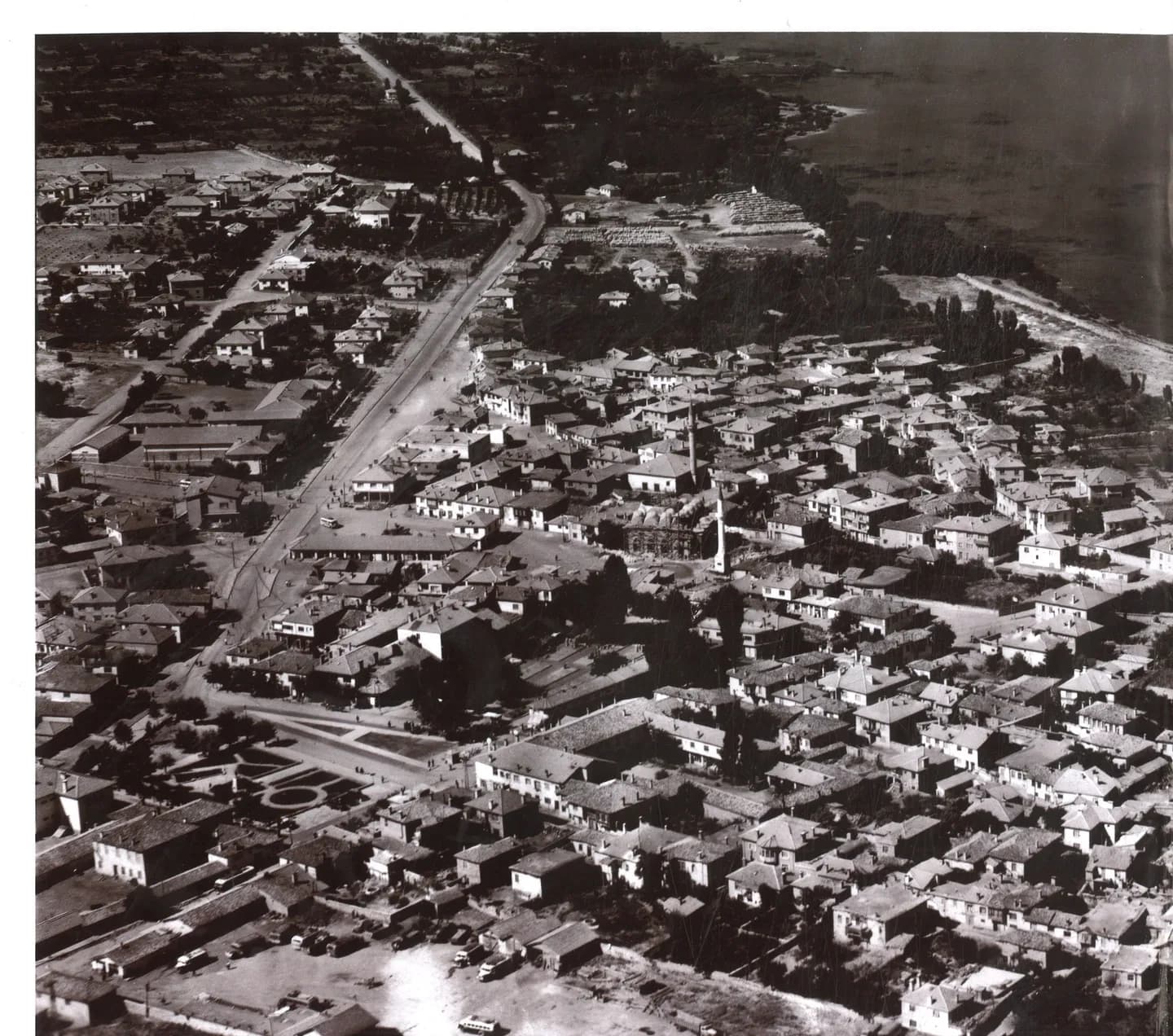
The historical town image supplies urban context, not a photograph of internees or the camp. No present-day building is identified as a visitable camp site without further evidence. Reading this chapter alongside familiar monuments shows how international conflict entered local history, while preserving the documented relationship between people, dates and places instead of turning a difficult episode into a picturesque anecdote.
A memoir often makes an unfamiliar period readable through ordinary details. Meals, daily routines or contact with residents can draw a reader close to one person's experience. Keep those details alongside the administrative circumstances that shaped the stay; familiarity in the writing does not remove compulsion.
Build a simple timeline while reading the study. Mark the Beyşehir period separately from the later Isparta period, and distinguish a remembered event from the date an account was written. This helps avoid stretching a short local episode across the whole wartime and post-war chronology.
Compare the kinds of evidence used by the researchers. A diary written during events, a later memoir and an interview can illuminate different aspects of the past. Agreement can be informative, but differences should not automatically be smoothed away into one seamless narrative.
Travelers' accounts offers a useful contrast in why outsiders came to the town and how they described it. Reading the two together expands the history beyond monuments while keeping voluntary travel and internment distinct. The present lake view can provide a setting for reflection without being labelled as a documented camp viewpoint.
Related places
·