
About this source
Beyşehir Bedesteni — mapped location
Kültür Envanteri · Kültür Envanteri
Read the place guides and stories that use this source.
Uses your device’s voice.
Bedesten
A domed covered market in the centre of the old town.
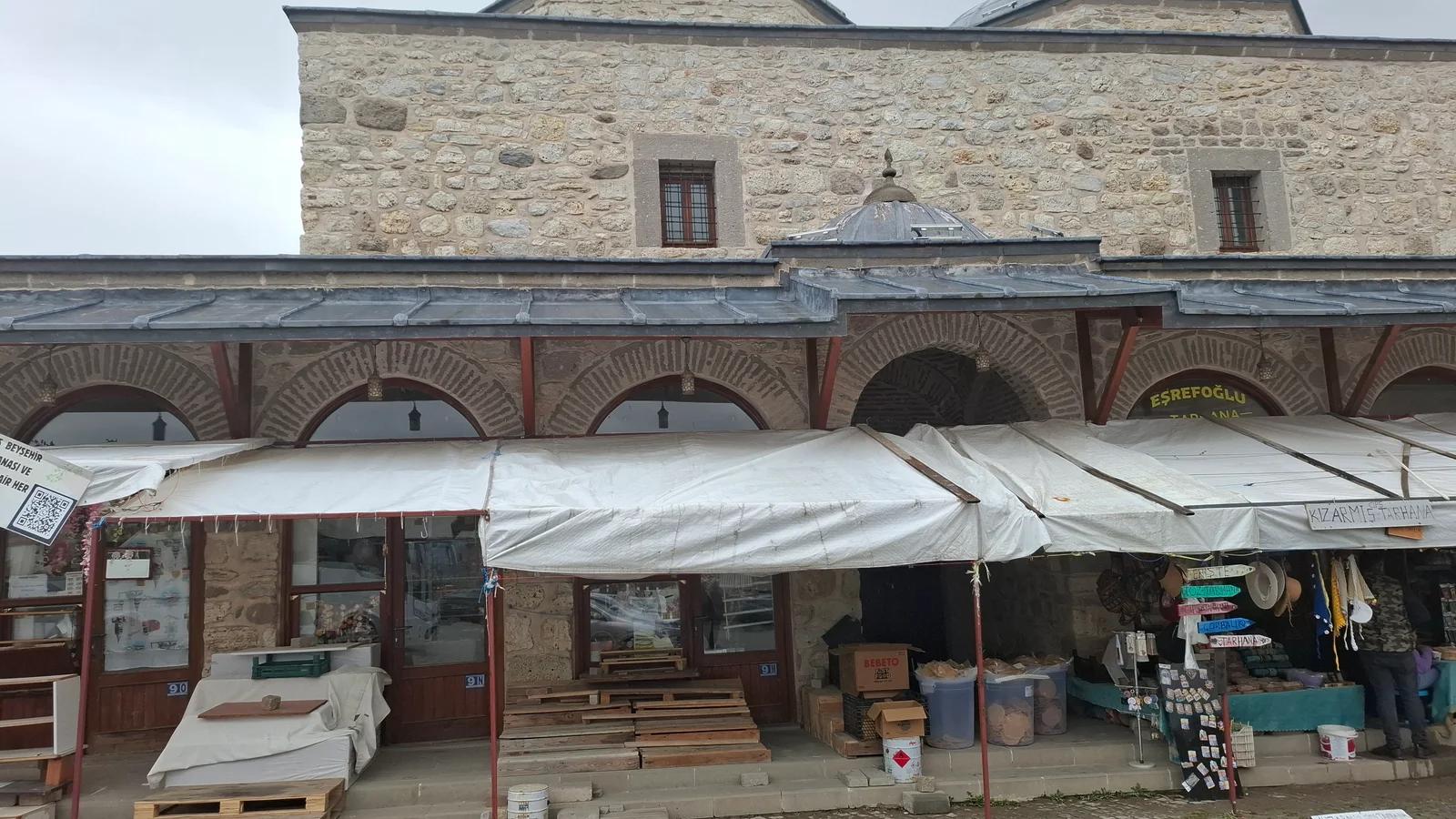
Beyşehir's Bedesten brought trading activity into a sheltered, domed space beside the mosque. Its entrances connect the market with streets used by people moving through the neighbourhood.
The municipal heritage accounts describe the building and its repairs. Read the market as a structure shaped by successive uses and interventions. Its construction date is disputed across the sources, while its form and place in the neighbourhood offer a clear starting point for a visit. Look at the roof, entrances and surrounding streets to understand how a sheltered trading space meets the town outside.
Look at the repeated bays and the relationship between roof and walls. Then consider the entrances from the street: where does an approach become a threshold, and how does the covered space change movement? Follow those changes at walking pace, moving from the exposed street into the sheltered threshold. The neighbouring mosque and bathhouse extend the story through their own histories of worship, trade and daily life.
Walk between the covered market and the surrounding streets to see how trade, worship and home life shared this compact neighbourhood. Notice the smaller doorways between monuments, and ask before photographing anyone at work.
At the market, notice the approach, entrance and return to the street. Watch how the roof changes the light and openings frame one another. This surviving layout remains visible even where trading uses have changed.
Look at the domed units as a repeated arrangement rather than as one continuous roof. Each bay contributes to a larger whole, much as individual shopfronts form the rhythm of a street. Compare the sheltered volume with the mosque's columned hall; both use repetition, but they organise different activities and different kinds of gathering.
The nearby bathhouse broadens this reading from exchange to daily routines. Its more enclosed exterior creates a different threshold from the market entrance. Walking between the two makes it possible to compare building types without assuming that the same people used them in precisely the same way through every period.
Read Beyşehir's table for food preparation and Artisans of Huğlu and Üzümlü for work outside town. If someone shares a market memory, note who spoke and when, keeping their experience alongside the architectural evidence.
Related places